The Coordinating Minister of Health and Social Welfare Professor Muhammad Ali Pate has called for domestic financing of the health sector by the three tiers of government.
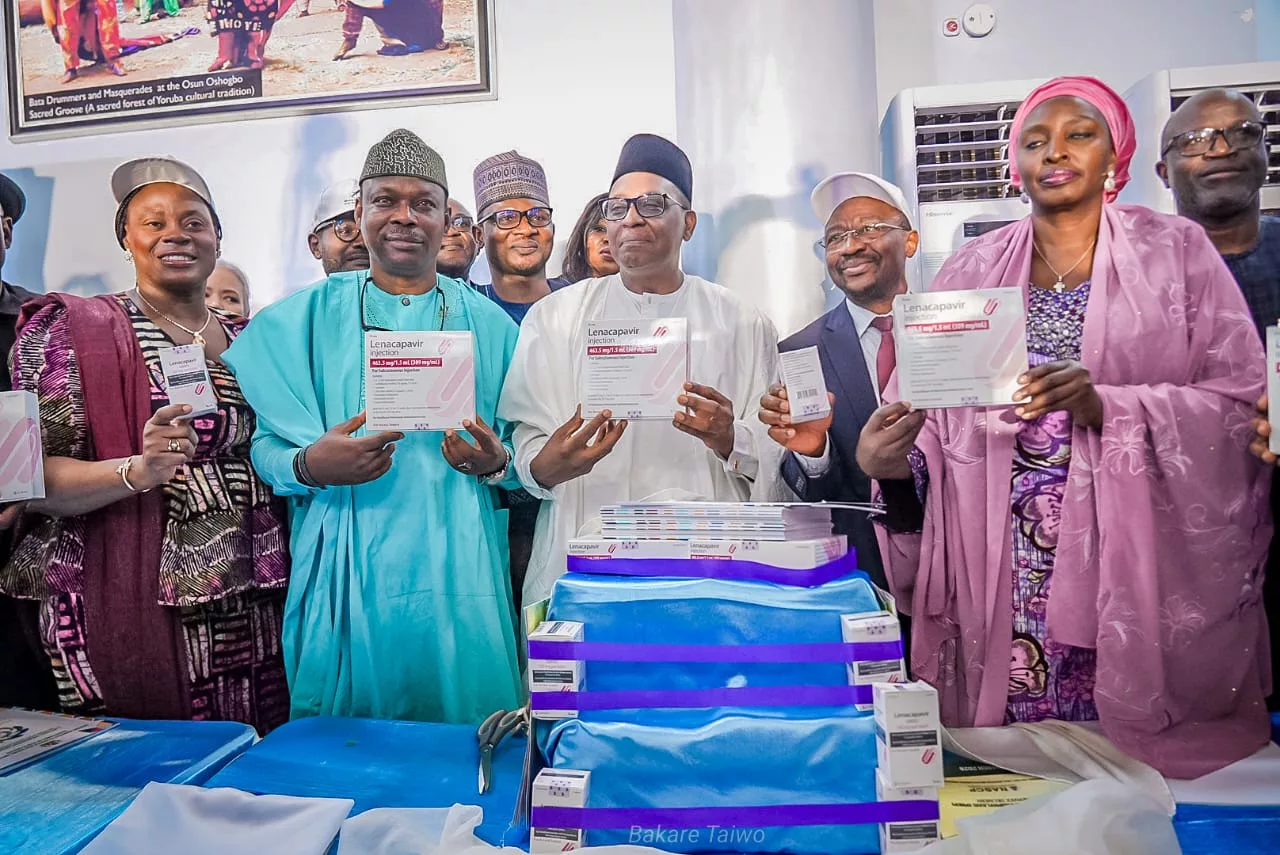
He made the call during the 2026 World TB Day ministerial press briefing and the official launch of the Multisectoral Accountability Framework (MAF-TB) and injectable Lenacapavir Pre-Exposure Prophylaxis (PrEP), organised by the Federal Ministry of Health and Social Welfare through the Department of Public Health.
The Minister stated that health financing is a global issue including Nigeria “The global space is changing right in front of our eyes. We deal with multiple crises all the time. Financing has become limited globally, but also constrained in many countries, including our country.”
“President’s vision for us to defragment the sector, to put national ownership, government leadership, but in a multi-stakeholder manner, bringing all actors together so that the responsibility lies on the sovereign, I think it’s proven to be very apt, given the changes that we’re seeing in the global landscape, where we improve the efficiency, use the resources that we have, use them well, but also effectively, make sure they deliver what they are supposed to deliver.”
He emphasized that under the Sector-wide Approach program, progress in many dimensions has been recorded, and on HIV, TB, malaria, and other diseases, government is committed to continue to work on this path, assuring that with the support of partners like the Global Fund and all the technical partners, Government of Nigeria will continue to double down so that in the long run, it not only demonstrate, but end these three diseases.
“I would say that the approach we took to bring different levels of government together, federal government, state, local governments, external partners, for Nigerian health system to operate as a national health system, the fiscally decentralized system we have, transfers resources to federal government and to state and local governments, and we need to work hand in hand at all levels of government and also with our partners.”
Pate expressed optimism that by 2030, Nigeria should be able to put its own domestic resources towards the priority diseases that afflict its people and stop consistently looking for grant.
” The only way that will happen is if Nigeria puts its own money where it matters for the health sector, and that is federal government, states, local government”
Earlier in his address, the Minister of State for Health and Social Welfare, Dr Iziaq Adekunle Salako, said that under the leadership of President Bola Ahmed Tinubu GCFR, and driven by the Nigeria Health Sector Renewal Investment Initiative (NHSRII), the Ministry has transitioned from fragmented, donor-dependent silos to a coordinated Sector-Wide Approach (SWAp) adding that this ensures that all availlable resources, are aligned behind national priorities to deliver measurable impact.
He further stated that through the NHSRII framework, the Ministry is prioritizing integration of TB and HIV services across all levels of care, alignment of partner support with national systems and priorities, strengthened accountability using tools like MAF-TB and providing sustainable financing to ensure TB and HIV services are free at the point of care.
Commenting on the progress so far, he announced that “It is heartwarming that our TB response has achieved historic milestones with case notifications surging from 138,591 in 2020 to 440,000 in 2025, the highest ever recorded in Nigeria. This achievement is the result of strategically expanding our diagnostic networks especially our GeneXpert network which increased from 32 machines in 2012 to 527 today, while TB-TrueNat capacity grew from 39 units in 2013 to 372 in 2026”.
Dr. Salako maintained that “As we continue to progress in achieving epidemic control, the need to intensify prevention strategies to sustain the gains through innovative, accessible, and scalable methods such as the LEN PrEP remains critical. The launch today of Lenacapavir, a long-acting injectable PrEP administered twice yearly, represents a transformative advance in HIV prevention. It offers high efficacy, discretion, and convenience, especially for individuals who face stigma, mobility challenges, or difficulty adhering to daily oral medications.”
Similarly, the Minister stated that the MAF-TB application will strengthen accountability and multisectoral coordination by enabling real-time tracking of commitments, ensuring all stakeholders including government, partners, and communities are aligned in delivering results.
He commended all partners, including the Global Fund, the United States Government through the Department of States, UN agencies like UNAIDS, WHO and UNICEF, and community stakeholders for their unwavering support and collaboration, urging Nigerians to always go for test whenever they experienced cough for more than two weeks.
In her welcome remarks, the Permanent Secretary of the Ministry Daju Kachollom S. mni said in alignment with this year’s theme, the Federal Ministry of Health and Social Welfare has reaffirmed its commitment to strengthening national leadership by significantly increasing domestic funding for HIV and TB programmes, thereby reducing reliance on donor support, adding that the Ministry has also committed to fostering community and citizen ownership by scaling up TB and HIV screening initiatives through Community‑Based Organizations (CBOs) and faith‑based groups.
Describing the significance of the event, the Permanent Secretary, maintained that the gathering is more than a ceremonial observance; as it marks two significant milestones in Nigeria’s public health response—the national launch of Lenacapavir (LEN) for HIV prevention and the unveiling of the Multisectoral Accountability Framework for TB (MAF‑TB) application.
She further stated that the event serves as a reminder of collecti responsibility to confront two of the most persistent public health challenges of our time—tuberculosis and HIV, noting that the diseases continue to affect millions globally, and Nigeria remains committed to leading with evidence‑based policies, innovation, and strong partnerships to reduce their burden.
Acknowledging the efforts of development partners, civil society organizations, healthcare workers, researchers, and the media for your unwavering support , she noted that their contributions continue to strengthen Nigeria’s health system and amplify progress.
” Nigeria has made significant progress in case detection and treatment, and these achievements are a testament to three vital groups: Our Partners – for their steadfast commitment.
- Our Frontline Health Workers – for their unwavering dedication.
- People Living with HIV and TB Survivors – for their courage and resilience throughout their recovery journeys ” Daju acknowledged.
Ado Bako
Assistant Director, Information and Public Relations
25/3/2026.