25/6/2026 Abuja| Nigeria-The Federal Government has reiterated its commitment towards strengthening chemical safety, public health security and emergency preparedness in Nigeria.
Mrs. Olufowobi-Yusuf Adeola, Director Food and Drugs Services Department, Federal Ministry of Health and Social Welfare, disclosed this in her opening remarks, during the Second Quarter, 2026, Meeting of the National Committee on Chemical Surveillance and Emergency Systems (NCCSES) for the review of the draft implementation strategy for the National Guidelines for Chemical Event Surveillance in Nigeria.
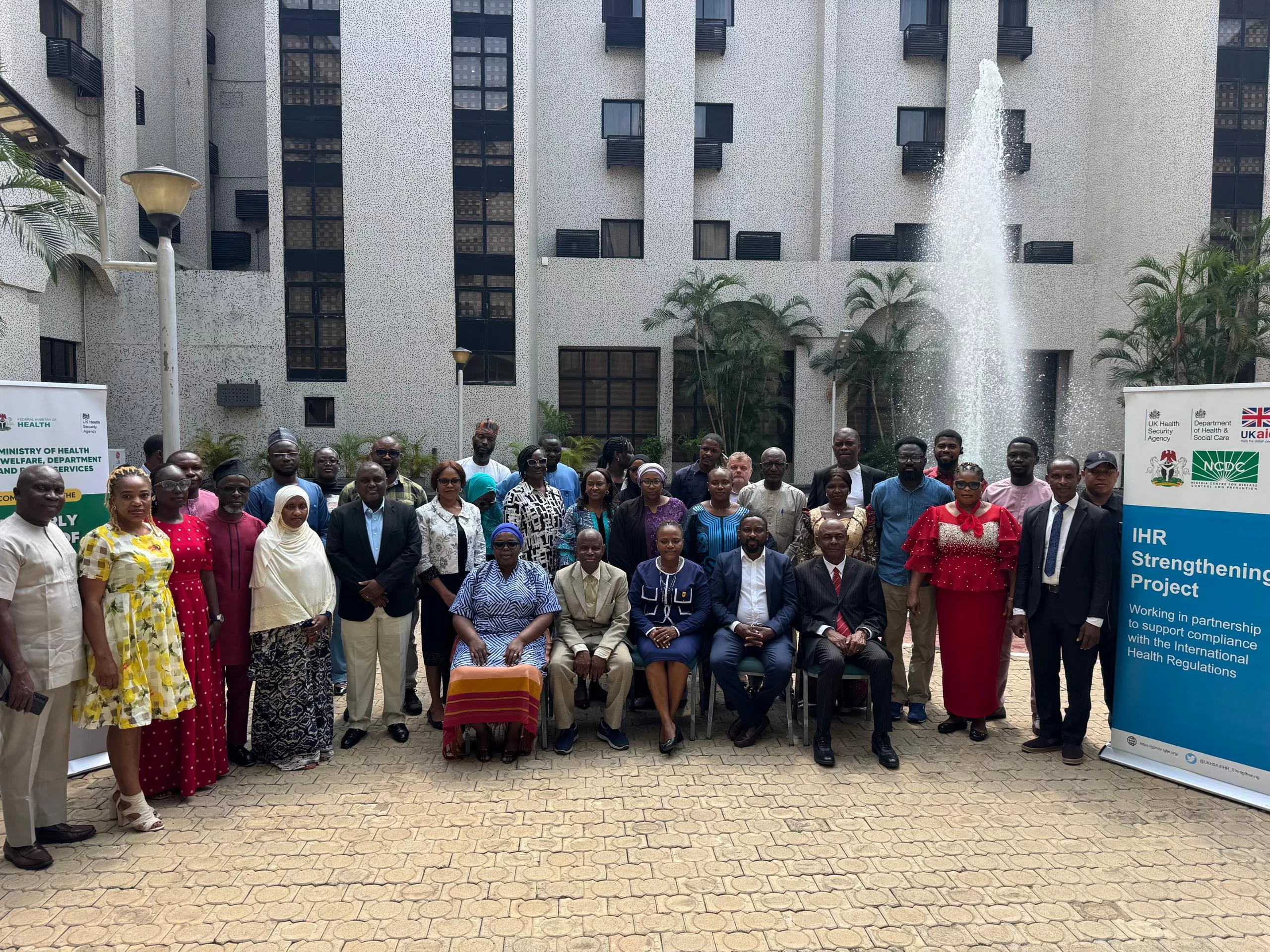
The meeting convened by the Ministry, through the Department of Food and Drugs Services and supported by UK Health Security Agency brought together representatives of Federal MDAs, Development Partners, Academia, Research Institutions, Regulatory Agencies, Professional Bodies, Emergency Response Organizations and other stakeholders.
According to her, chemical incidents continue to pose significant risks to human health, environment, livelihoods and national development, recognizing these challenges, she said, in line with the obligations of the International Health Regulations (2005), and recommendations from the Joint External Evaluation (JEE), and the One Health approach, the Federal Ministry of Health and Social Welfare, established the National Committee on Chemical Surveillance and Emergency Systems (NCCSES) to provide a multi-sectoral platform for strengthening chemical events surveillance and response in Nigeria.
Mrs, Adeola, further revealed that with the collective efforts of the NCCSES and other partners, significant progress has been made over the years.
The Director cited the progress to includes: the development and launch of the National Guidelines for Chemical Event Surveillance in Nigeria, laboratory mappings and capacity assessment initiatives, strengthening multi-sectoral collaborations, advancing the establishment of Poison Information Centres and promoting awareness of chemical hazards and their public health implications.
She noted that for effective implementation, it is imperative to develop a practical, coordinated and sustainable roadmap that will translate the provisions of the guidelines into measurable actions and tangible outcomes at national, state and community levels, and charged the participants to make positive inputs during the deliberations.
In a goodwill message, Dr. Ayo Oyinloye, Country Lead, United Kingdom Health Security Agency, was optimistic that Nigeria will attend the minimum standards set by World Health Organization that countries should aspire to the competences to be able to provide a secure world free from all threats, chemical, infectious, at the same time promoting trade and peace.
He highlighted that United Kingdom Health Security Agency is providing technical expertise to partner countries to be able to demonstrate these competencies, describing the work of the committee as extremely important, as nobody can do it for Nigeria but rather Nigerians themselves. His words” So please, remember you are not just here on behalf of your organization. You are here on behalf of 120 million Nigerians who are looking up to you and depending on you to do the job to keep us safe. So, thank you very much and I wish you a successful deliberation”
Among issues discussed during the Second Quarter Meeting includes: review of progress of the 1st quarter meeting, assessment of implementation of key action points, review of the national guidelines on chemical event surveillance in Nigeria, strengthen multisectoral collaboration for chemical surveillance, enhance coordination among health, environment, agriculture, industry, emergency management and security sectors. Other issues are: improve reporting mechanism for chemical incidents, promote integrated surveillance using the One Health approach and identifying implementation priorities for strengthening national chemical event, preparedness and response.
The meeting demonstrates the Ministry of Health Leadership in coordinating multisectoral action for effective chemical safety governance in Nigeria and as well, represents another significant milestone in Nigeria’s commitment to strengthening health security through an integrated chemical surveillance system. It also indicàtes government’s commitment towards protecting Nigerians from the health, environmental and socio-economic consequences of chemical incidents while supporting national and international obligations under the International Health Regulations-IHR (2005), the One Health approach and the Sustainable Development Goals (SDGs).
Ado Bako
Assistant Director, Information and Public Relations.