BY THE PERMANENT SECRETARY, FEDERAL MINISTRY OF HEALTH AND SOCIAL WELFARE
DAJU KACHOLLOM S., mni
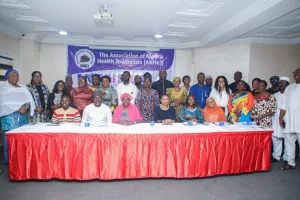
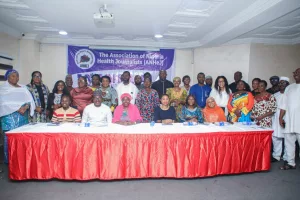
AT THE 10TH ANNUAL CONFERENCE OF THE ASSOCIATION OF NIGERIA HEALTH JOURNALISTS (ANHEJ)
BLUE SPRING HOTEL, ABUJA | THURSDAY, 26 NOVEMBER 2026
| THEME: “NHSRII: FROM POLICY TO TANGIBLE IMPACT” |
PROTOCOL
It is a pleasure to be with you at the 10th Annual Conference of the Association of Nigeria Health Journalists, and I congratulate the leadership and members of the Association on this milestone. For a decade, you have followed the health sector to places many Nigerians never see: the labour ward at midnight, the health centre without power, the outbreak nobody wanted to discuss. You have told those stories even when they were uncomfortable for those of us in government. That is your job, and you have done it well.
Your theme, “NHSRII: From Policy to Tangible Impact,” puts a direct question to government, and I have come to answer it with an account. It is also well timed. In the last two weeks, the Joint Annual Review of the health sector asked us to “Make Reform Data Count,” and the 67th National Council on Health in Lafia met under the theme “From Commitments to Results.” In ten days, Abuja will host the world on antimicrobial resistance. The question across all three is yours: what has changed for Nigerians?
In December 2023, Mr. President launched the Nigeria Health Sector Renewal Investment Initiative and presided over the signing of the Health Sector Renewal Compact with all 36 State Governors and our development partners, committing us to one plan, one budget and one report under a Sector-Wide Approach. Three years on, all 41 Presidential health-sector commitments have been achieved, and 12 of the 13 health indicators we track have improved. Permit me to share some highlights.
We have revitalised 3,526 primary health centres, with 900 more under way, and we have staffed them: the share of participating facilities supported by the Basic Health Care Provision Fund in the 172 MAMII local government areas with at least two midwives or community health extension workers has risen from 12 to 91 per cent. Skilled deliveries in those facilities rose from 4.8 million in 2023 to 7.9 million by mid-2026. In the 172 local government areas that carry more than half of our maternal deaths, maternal deaths fell by 17 per cent and newborn deaths by 12 per cent between 2023 and 2025. Measles and rubella vaccination has reached 100 million children, and more than 17 million girls have received the HPV vaccine. Health insurance enrolment has grown from about 16 million to nearly 24 million Nigerians. Ten factories and manufacturing lines have been commissioned to expand local production of medicines, diagnostics, mosquito nets and medical oxygen. And States have raised their combined health budgets from ₦1.97 trillion in 2023 to more than ₦3.3 trillion this year.
Results must also last. The Council has adopted recommendations to strengthen the sustainability of health campaigns through a unified national framework, pooled and aligned financing, standardised worker incentives with digital payments, and a progressive transition into Federal and State budgets and Annual Operational Plans. It has also adopted Perennial Malaria Chemoprevention as national policy for children under two, with its integration into routine immunisation schedules.
But I will not tell journalists the job is done. Stunting remains unacceptably high, affecting about four in ten children under five. Nigerians still tell us that care costs too much and that its quality is uneven. Even with nearly 24 million Nigerians enrolled in health insurance, coverage remains at only about one in ten. We do not yet have enough health workers where they are needed most. And before the Council, we received only 412 of the 740 reports expected on the implementation of last year’s resolutions, with ten States recording implementation scores below 40 per cent. A resolution that is never implemented is just another announcement. These are stories I expect you to write too.
At the Joint Annual Review, the Coordinating Minister described it as the truth machine that keeps our health sector honest. A free and informed press is the other truth machine. When we announce a revitalised facility, go and see it. When your State makes a commitment at Council, ask a year later what became of it. Ask what changed, for whom, and by how much. If the answer is nothing, tell Nigerians, and tell us.
I also ask two things of you. First, verify. In health, a false rumour can empty an immunisation post in a day, and a careless headline during an outbreak can keep sick people away from care. Separate evidence from anecdote and correct your mistakes as visibly as you published them.
Second, use your influence for health. Many of you reach more Nigerians than some government agencies, and they trust you. The new programmes agreed at Council, from care in a child’s first 1,000 days to responsible alcohol use and voluntary blood donation, depend on the media to carry them into homes. Encourage mothers to attend antenatal care and deliver with a skilled attendant, parents to complete their children’s vaccinations, and every Nigerian to enrol in health insurance and to know the warning signs of hypertension and diabetes. One well-told story can do what many government campaigns cannot.
Nowhere is this truer than antimicrobial resistance. From 6 to 8 December, Nigeria will host the 5th Global High-Level Ministerial Conference on Antimicrobial Resistance, the first on African soil, where Ministers of Health from over 100 countries are expected to adopt the Abuja Compact. AMR is a silent pandemic: when antibiotics fail, routine infections, surgery and childbirth all become more dangerous. Global commitments will mean little unless Nigerians stop self-medicating and finish the courses they are prescribed, which is why our new e-pharmacy policy insists that, duly licensed and authorised professionals only issue prescriptions. I invite you to cover the conference in depth, and to keep telling the story after the delegates leave.
For our part, we will keep the facts open. The primary health care functionality dashboard and the Joint Annual Review scorecard are public; DHIS2 is becoming our single national health data platform; and the 2023–2024 National Health Accounts will be published, showing how much Nigeria spends on health and who pays. When a story is breaking, we will work to give you verified information quickly, so that the rumour does not get there first.
Next year is the final year of our Health Sector Strategic Blueprint. Judge us by it. Let us move the conversation from “What did government announce?” to “What changed?”; from “How much was invested?” to “What did it achieve?”; and from “What facility was commissioned?” to “How many lives are better served?” That is the test the Renewed Hope Agenda of His Excellency, President Bola Ahmed Tinubu, GCFR, is prepared to take.
Congratulations once again on ten years of the Association. I wish you a successful conference. Thank you, and God bless the Federal Republic of Nigeria.