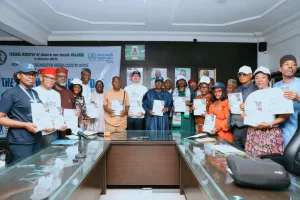
The Federal government has reaffirmed its commitment to strengthen maternal and newborn health care and noted that the remaining gaps is ensuring that every pregnant woman receives respectful, evidence-based, and life-saving care when and where she needs it.
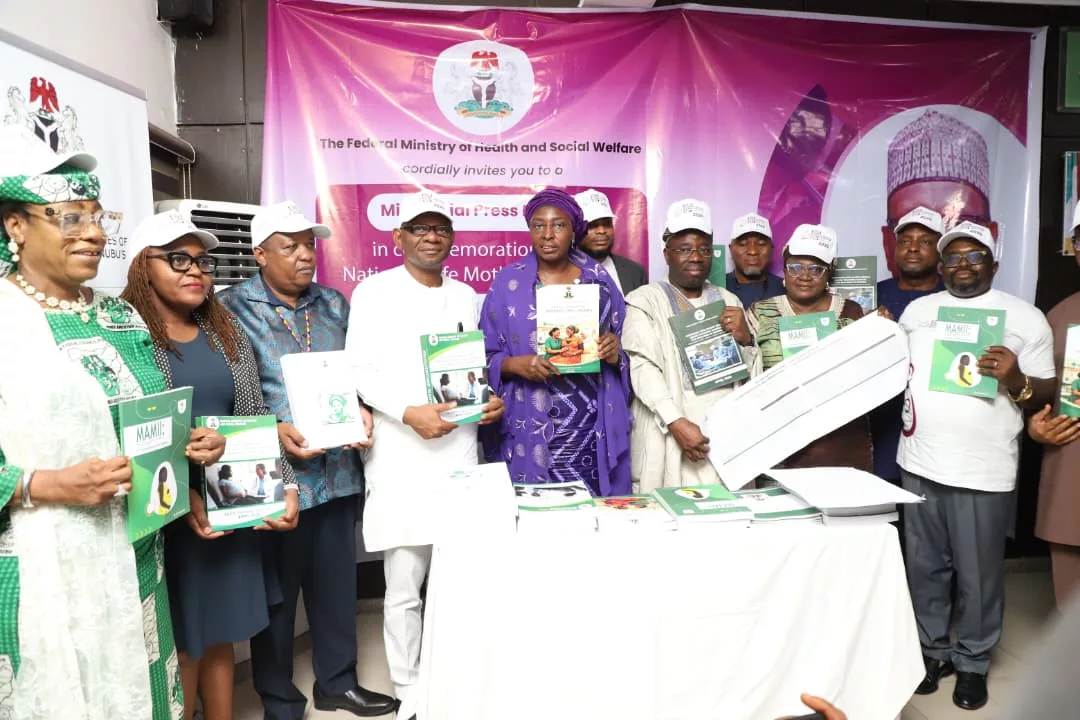
Professor Muhammad Ali Pate, Coordinating Minister of Health and Social Welfare who disclosed this in Abuja at press briefing to mark 2026 Safe Motherhood Day said a key milestone in improving maternal and newborn outcomes in Nigeria is the implementation of the Maternal and Neonatal Mortality Reduction Innovation and Initiative (MAMII).
He said the initiative which is now activated in 32 states across the federation, has being strengthening service delivery, enhancing emergency obstetric and newborn care, and improving referral systems, reflecting government unwavering commitment to translating policy into action and accelerating progress towards safer motherhood for every Nigerian woman.
Represented by the Permanent Secretary Federal Ministry of Health and Social Welfare Daju Kachollom S. mni, the Coordinating Minister further noted that a critical step toward improving equitable access to quality emergency services across the country, the National Health Insurance Authority (NHIA) is expanding financial access to Comprehensive Emergency Obstetric and Newborn Care (CEmONC) services, ensuring that cost is no longer a barrier to lifesaving care for mothers and newborns.
Pate explained that since the programme was launched, more than 32,000 women and 1,700 newborns have benefitted from emergency obstetric and neonatal care, and currently over 250 health facilities are implementing the programme, noted that for strengthening nationwide coverage and impact, additional facilities are at various stages of activation and readiness.
The Health Minister said Nigeria’s emergency medical response under NEMSAS/RESMAT has expanded significantly, strengthening access to timely lifesaving services, particularly for pregnant women. “RESMAT services are currently operational in 136 out of the 172 MAMII LGAs, while Emergency Medical Teams (EMTs) have been established across all 36 states and the FCT, with active operations ongoing in 20 states” he reaffirmed.
To support these efforts, Pate said a total of 612 ambulances have been deployed across 340 LGAs, improving referral systems and rapid response capacity nationwide.
So far, the programme has facilitated the transportation of 78,962 beneficiaries, demonstrating its critical role in bridging access gaps to emergency care. “Notably, pregnant women account for about 60% of these cases—approximately 47,000 women” highlighting the programme’s substantial contribution to improving maternal health outcomes and reducing delays in accessing skilled care.
“This year’s theme, “Closing the Gap: From Coverage to Quality Care for Every Mother,” and the powerful slogan, “Care That Saves. Systems That Deliver,” speak directly to the heart of our national priorities. They remind us that access alone is not enough—what truly saves lives is the quality, timeliness, and equity of care provided to every woman, everywhere in Nigeria.” He emphasized.
Among the critical policy and service delivery instruments that will further strengthen the quality of maternal and newborn care across Nigeria, launched by the Coordinating Minister include:
The Obstetrics Clinical and Newborn Service Protocol -provides standardized, evidence-based guidance for healthcare workers to deliver high-quality care during pregnancy, childbirth, and the postnatal period; The Life Saving Skills (LSS) and Expanded Life Saving Skills (ELSS) packages – designed to build the competencies of frontline health workers in managing obstetric and newborn emergencies.
Others are: The revised Antenatal Care (ANC) Guidelines align with global best practices and the WHO recommendations for a positive pregnancy experience, The Maternal and newborn Product Introduction Plan- represents a strategic approach to the coordinated rollout of priority maternal and newborn health commodities, and the MAMII Comprehensive Guide -serves as an operational blueprint for implementing the Maternal and Neonatal Mortality Reduction Innovation Initiative.
He called on state governments, development partners, communities, Health workers to sustain efforts as
these interventions reflect a fundamental shift—from fragmented efforts to a more coordinated, systems-based approach, reiterating that safe motherhood is not achieved by isolated actions, but by strong systems that function effectively at every level—from the community to the tertiary facility.
“However, government cannot do this alone. We call on our state governments to sustain and scale these interventions. We urge our health workers to continue providing compassionate and high-quality care. We encourage our communities to support women in seeking timely care. And we invite our partners to continue their invaluable collaboration in this shared mission.”
Earlier, the permanent secretary of the ministry, Daju Kachollom S. mni, whose Welcome Remarks was presented by the Permanent Secretary Designate and Director, Health Planning Research and Statistics, Dr. Kamil Shoretire, reiterated the commitment of the federal government to improving maternal and newborn health outcomes, with a renewed focus on delivering quality care across Nigeria.
According to the Permanent Secretary, while Nigeria has recorded significant progress in expanding maternal health service coverage over the years, access alone does not guarantee improved outcomes, maintaining that timely, skilled, and compassionate care remains the defining factor in reducing maternal and newborn mortality.
The World Health Organization (WHO) County, Dr. Pavel Ursu, in his goodwill message, read by Dr. Martin Joseph, commended the Federal Ministry of Health and Social Welfare for its sustained efforts in advancing national health programmes and strengthening the country’s health system.
Ursu, highlighted that this year’s theme, “Closing the Gap: From Coverage to Quality Care for Every Mother,” stressed the urgent need to ensure that no woman dies during childbirth, emphasizing that access to healthcare alone is insufficient without quality and respectful services.
The organization acknowledged that Nigerian government has recorded measurable progress through ongoing health sector reforms, improved coordination, and strengthened collaboration among stakeholders, stressing that, dialogue and coordination mechanisms have significantly contributed to better health system performance across the country.
Ado Bako
Assistant Director, Information and Public Relations
15/4/2026.