-Says It’s a Critical Component of Public Health Agenda
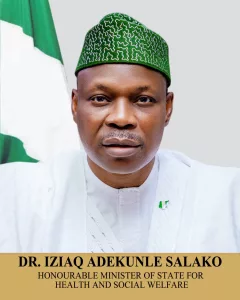
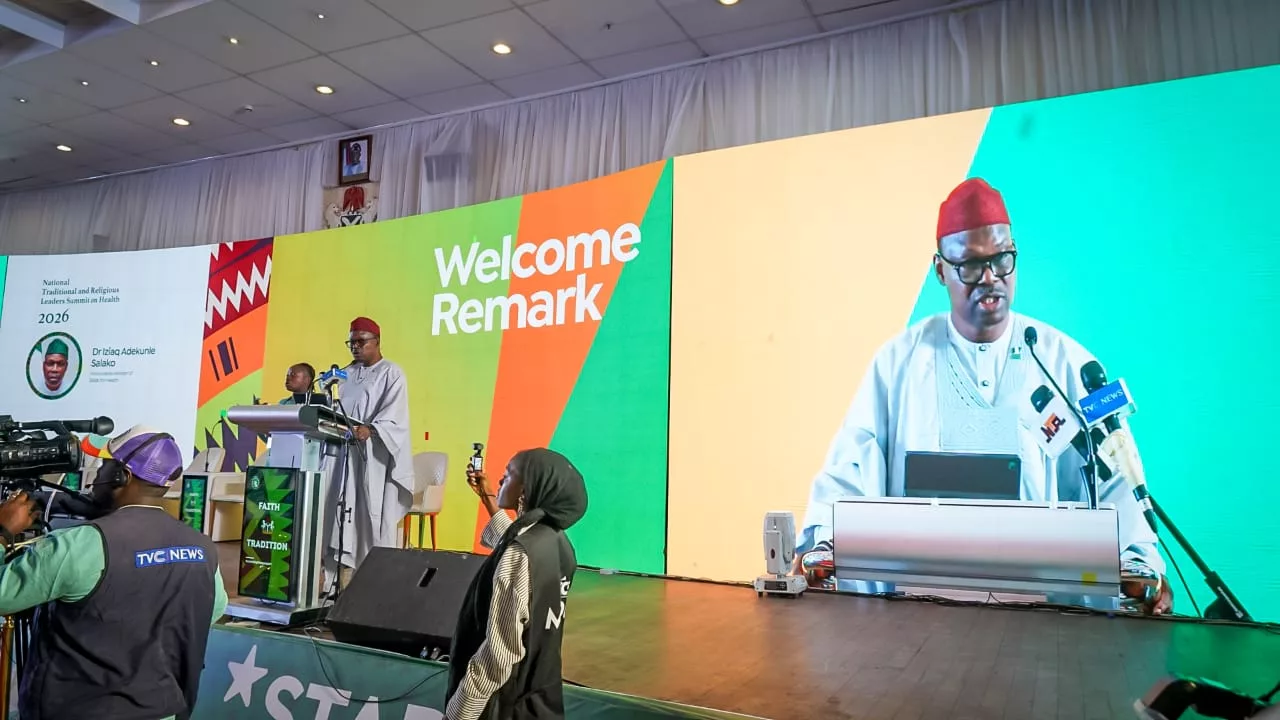
Minister of State for Health and Social Welfare, Dr Iziaq Adekunle Salako has expressed satisfaction on the motherly leadership of Her Excellency, Senator Oluremi Tinubu, CON, the First Lady of the Federal Republic of Nigeria to the number 1 agenda-Food Security of the Federal Government.
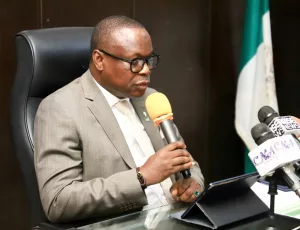
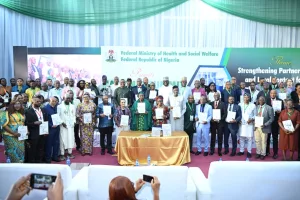
The Minister made the commendation in his Welcome Remarks at the National Traditonal and Religious Leaders’ Summit on Health, 2026 with a theme “Role of Traditional and Religious Leaders in Advancing the Nigeria Health Sector Renewal Investment Initiative (NHSRII), held at Banquet Hall, State House , Abuja.
He noted that the first lady’s unparallel commitment to the welfare of the Nigerian family is clearly being demonstrated by her many committed and passionate interventions through the Renewed Hope Initiative.
Salako cited the Flag-off of the Advocacy and Awareness Campaign for the National Community Food Bank Program at the summit as another demonstration of her deep devotion to the health and welbeing of the average Nigerian, adding that this further indicates her commitment towards achieving zero hunger in the country.
“The National Community Food Bank Program, championed by Her Excellency, Senator Oluremi Tinubu, CON, which we are proud to see come into fruition today demonstrates the unwavering commitment of the first lady to achieve zero hunger in our country” he reaffirmed.
The Health Minister further explained that the initiative promotes the health vision of the Renewed Hope Agenda by addressing the Nutrition Gap as a vital complementary initiative to preventive, curative and rehabilitative healthcare, recognizing that good health outcomes are driven by good nutrition.
Other benefits of the program include: Safeguarding our children’s cognitive and physical development a critical investment in the future of our country; and fostering Community accountability by requiring community leadership for uptake, noting”the Food Bank ensures that the most vulnerable Nigerians have access to essential nutrition, thereby reducing the burden of preventable illness.”
Elaborating the critical roles of Traditional and Religious Leaders, Dr. Kunle Salako said without any contradiction, evidence shows that when Traditional and Religious leaders are engaged meaningfully in the design, implementation, monitoring, and evaluation of health interventions, service uptake such as immunization, antenatal care increases; health outcomes such as reduced vaccine refusal, greater contraceptive use improve; and trust and accountability are strengthened, especially where formal health systems have limited penetration.
During the 2024 polio outbreak response in Nigeria, Dr. Salako recalled that traditional leaders resolved 65% of reported vaccine refusals across 17 northern states, saying “In Adamawa and Kebbi, resolution rates reached 92 % and 84 %, respectively.
“Through TRLs’ involvement in community engagement and mapping, programs enumerated 926,007 under-five children, and vaccinated 851,929 (≈92 %) of them across high-risk wards; an extraordinary coverage outcome.” He confirmed
Emphasizing on the objectives of the engagement, the Minister said the goal is to transition from government-led reform to community-owned healthcare system for better outcomes by: Building Awareness & Ownership “in order to deepen our traditional and religious leaders’ understanding of the Nigerian Health Sector Renewal Investment Initiative, the operationalization blueprint for Mr. President’s health vision under the Renewed Hope Agenda”.
Other objectives are: Strengthening Community Engagement by amplify their roles as our religious and traditional leaders in promoting trust, accountability, and drive the demand of healthcare services especially for public health interventions like routine immunization, screening services, safe motherhood,nutrition and other areas to secure family health, and Securing Strategic Partnerships: To formalize a high-level commitment between the government and our “gatekeepers of community norms”.
He charged the participants to engage in the conversation through the following channels: Structured Plenary & Feedback: “We look forward to your contributions as the ministry and its relevant agencies present its priorities, specifically identifying community barriers that hinder health progress” Salako explained.
He further stated that other channels are Panel Dialogue: “During Session II, we look forward to your reflections and shared experiences from the frontlines of your communities; Defining Action Pathways: to focus on establishing clear, agreed roles that can be taken back to mobilize our people, and Commitment to the Communiqué: “The day will culminate in the adoption of a Summit Communiqué, capturing our collective, accountable actions for follow-through.”
Dr. Iziaq Adekunle Salako, highlighted that at the end of the summit, every participant is expected to be a strategic Partner and Champion of the Nigeria Health Sector Renewal Investment Initiative and the profound vision of President Bola Ahmed Tinubu GCFR to treat the health of every Nigerian “as a matter of urgent right”
Ado Bako
Assistant Director Information and Public Relations
17/2/2026.