28 November 2026-The Federal Government has reaffirmed its commitment to strengthening local pharmaceutical manufacturing as a strategic pathway to achieving medicine security, healthcare resilience and sustainable economic development in Nigeria and across Africa.
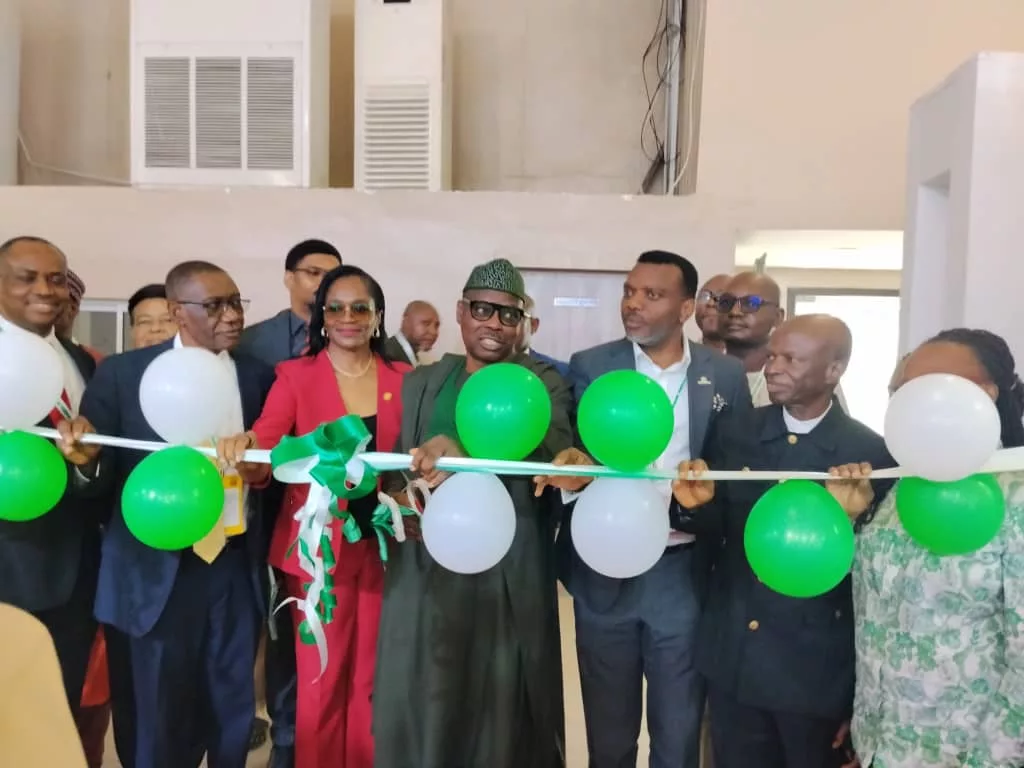
The Minister of State for Health and Social Welfare, Dr. Iziaq Adekunle Salako, stated this on Monday, 28 September 2026, while declaring open the 8th Nigeria Pharma Manufacturers Expo (NPME), organised by the Pharmaceutical Manufacturers Group of the Manufacturers Association of Nigeria (PMG-MAN), at Harbour Point Event Centre, Victoria Island, Lagos.
Salako said the disruptions experienced during the COVID-19 pandemic and changes in the global healthcare financing landscape had reinforced the need for Nigeria and Africa to develop stronger domestic capacity to produce medicines, vaccines, diagnostics and other critical health technologies.
“Our conversation can no longer be limited to whether we can access medicines when global supply chains are functioning. The more fundamental question is whether we can produce what our people need when those supply chains are disrupted. Medicine security is therefore not simply a health-sector objective; it is an issue of national resilience and sovereignty,” he said.
The Minister said the Federal Government, under the leadership of President Bola Ahmed Tinubu, had introduced strategic interventions, including the Presidential Initiative to Unlock the Healthcare Value Chain (PVAC) and the Presidential Executive Order for Pharmaceutical and Allied Sectors, to revitalise local manufacturing and strengthen the health value chain.
He disclosed that PVAC had secured commitments of about US$2 billion at single-digit interest rates, with about 50 Nigerian health firms in advanced funding discussions, while the initiative targets at least 70 per cent local production of essential healthcare products by 2030.
He added that 87 local manufacturers were benefiting from the implementation of the Presidential Executive Order providing zero tariffs on pharmaceutical machinery, APIs and excipients across almost 1,000 Harmonised System codes, re-emphasizing that the Order provides fiscal and non-fiscal measures, including tariff relief and market-shaping mechanisms, to support local production.
Salako further highlighted ongoing efforts to expand local production of APIs, vaccines, biologics, diagnostics and other health commodities, including the operationalisation of the NIPRD API Capacity Building and Concept Production Centre, development of commercial API manufacturing capacity, and initiatives to localise the production of HIV, Hepatitis and Syphilis diagnostic products.
The Minister, called for greater investment in research and development, particularly in harnessing Nigeria’s rich phytomedicinal resources. “Localization must not mean simply importing the active ingredients, packaging materials and technologies and assembling the final product here. We must progressively build capacity across the entire value chain—from research and raw materials to formulation, quality assurance, manufacturing, packaging and distribution. That is how localization becomes genuine capability,” the Minister stated.
He said the establishment of Medipool, Nigeria’s national Group Purchasing Organisation for essential medicines and medical commodities, would help create predictable and large-scale demand for domestic manufacturers by aggregating procurement, negotiating bulk purchases and improving supply-chain efficiency.
Salako urged pharmaceutical manufacturers, researchers, investors and development partners to embrace regional manufacturing and leverage the African Continental Free Trade Area to expand markets and strengthen competitiveness, stressing that the success of Nigeria’s pharmaceutical transformation would depend on sustained investment, innovation, regulatory alignment and market integration.
“We must move from dependency to capability, from fragmented markets to regional scale, and from localization to genuine African pharmaceutical sovereignty. Our health security will be built not only in hospitals and laboratories, but also in our factories, universities, research centres, supply chains and investment decisions,” he said.
Declaring the 8th Nigeria Pharma Manufacturers Expo open, with the theme of the Expo “Regional Manufacturing: Advancing Africa’s Pharma and Life-Science Sovereignty through Localization.” the Minister, expressed confidence that sustained collaboration among stakeholders would contribute significantly to achieving medicine security, strengthening Nigeria’s healthcare value chain and building a more resilient pharmaceutical manufacturing ecosystem for Nigeria and Africa.
Ado Bako
Assistant Director, Information and Public Relations