26 September 2026: Nigeria has reaffirmed its commitment to strengthening pandemic prevention, preparedness and response (PPPR), while calling for a more equitable, sustainable and accountable global health security architecture that prioritises prevention, national ownership and international solidarity.
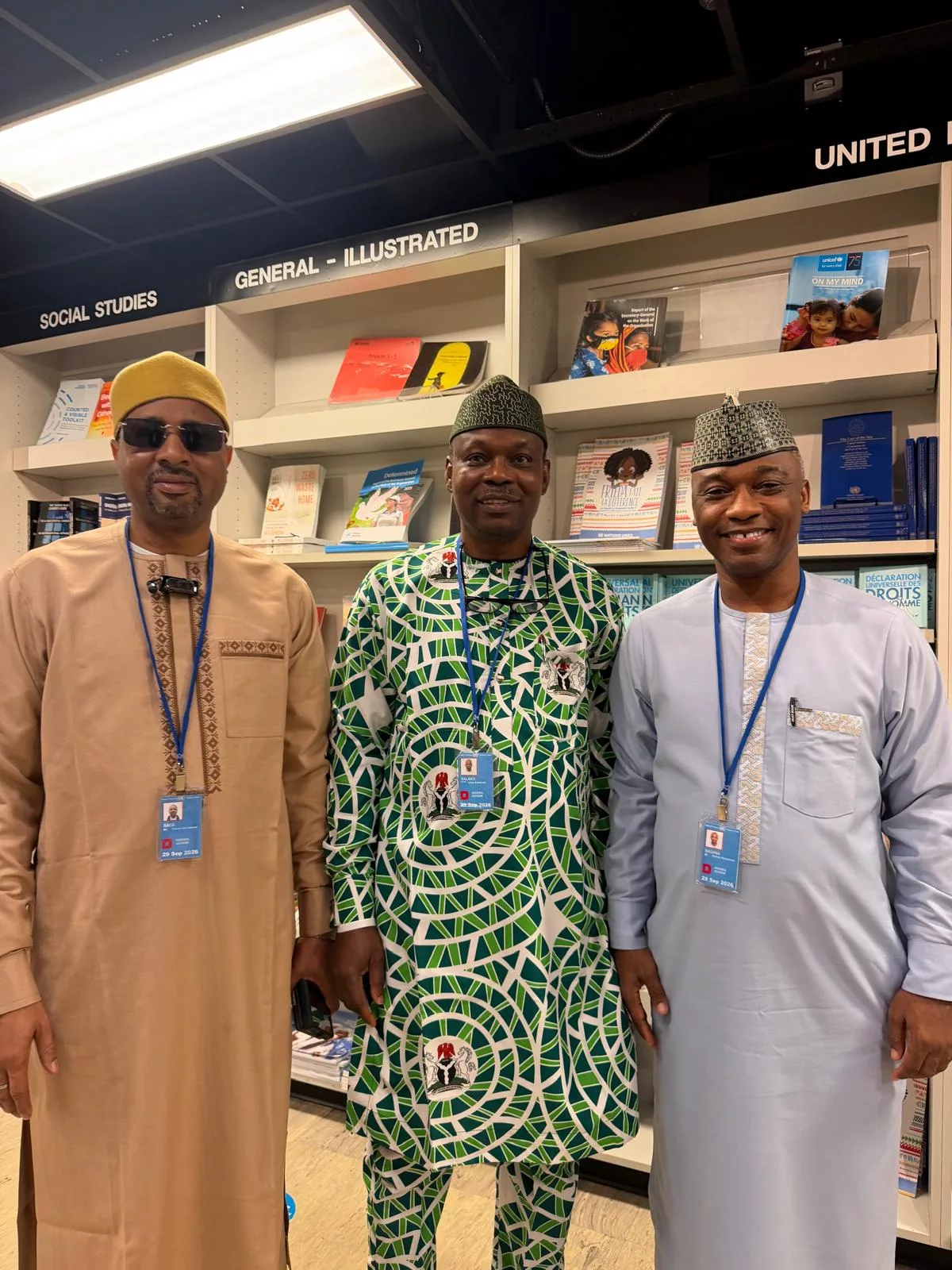
Minister of State for Health and Social Welfare, Dr Iziaq Adekunle Salako, stated this while delivering Nigeria’s National Statement on behalf of President Bola Ahmed Tinubu, GCFR, at the High-Level Meeting on Pandemic Prevention, Preparedness and Response held on the sidelines of the 81st United Nations General Assembly at the United Nations Headquarters, New York.
Salako said Nigeria considers preparedness strongest when built on public health systems capable of preventing, detecting and controlling infectious threats every day.
“We believe that prevention is preparedness and that the strength of everyday public health systems determines how effectively nations detect threats early, respond rapidly, and maintain essential services during crises.”Salako reiterated.
He highlighted the country’s progress in strengthening its legal and institutional frameworks, expanding nationwide digital surveillance, institutionalising the 7-1-7 approach, enhancing genomic sequencing capacity and improving multi-hazard preparedness.
Dr. Adekunle noted that Nigeria’s public health laboratory network now covers all 36 States, while Public Health Emergency Operations Centres support coordinated responses to outbreaks including Lassa fever, cholera, diphtheria and meningitis, and its Joint External Evaluation score also improved from 39 per cent in 2017 to 54 per cent in 2023.
According to him, Nigeria is advancing implementation of the One Health approach, antimicrobial resistance (AMR) governance, infection prevention and control programmes, and emergency workforce capacity at national and sub-national levels.
He added that the US$250 million World Bank Health Security Programme is supporting the strengthening of health security capacities at federal and State levels.
“Through the World Bank’s US$250 million Health Security Programme, federal and State level capacities are being built under a One Health approach.” He added
The Minister outlined five national priorities for pandemic preparedness: strengthening national ownership, governance and legal preparedness; placing prevention at the centre of preparedness; building integrated, resilient and One Health systems; advancing equitable access, financing and African manufacturing; and deepening regional and global solidarity and accountability.
Nigeria also called for equity to remain at the centre of the global PPPR agenda, stressing that access to pathogens must be matched by fair, timely and predictable benefit-sharing arrangements, including access to vaccines, diagnostics and therapeutics.
The country further advocated sustainable and rapidly accessible financing for low- and middle-income countries, alongside technology transfer and stronger domestic manufacturing capacity, particularly in Africa.
Salako said Nigeria supports a holistic pandemic preparedness and response agenda that recognises the continuing importance of diseases such as tuberculosis, malaria and HIV, and called for commensurate financing for these programmes.
He also emphasised that AMR must remain firmly embedded in the global PPPR agenda, describing it as both a current public health threat and a multiplier of pandemic risks.
He announced that Nigeria will host the 5th Global High-Level Ministerial Conference on Antimicrobial Resistance in December 2026, the first time the conference will be held in Africa. The meeting, he said, will provide an opportunity to accelerate measurable One Health action and advance the priorities of low- and middle-income countries.
The Minister further stressed the importance of communities as partners in pandemic preparedness, noting that public trust cannot be built only after an emergency begins. He called for sustained investment in Risk Communication and Community Engagement (RCCE), social listening, community hygiene and infodemic management between emergencies.
Nigeria, he reaffirmed, remains committed to strengthening national and regional capacity to prevent, detect and respond to public health threats, while supporting a global pandemic preparedness architecture that is equitable, sustainable, accountable and aligned with nationally determined priorities.
“National ownership and global solidarity, must advance together.” he stressed.
Ado Bako
Assistant Director, Information and Public Relations.