
27, April, 2026
Abuja- The Federal Government has developed a new, robust National Malaria Strategic Plan, 2026-2030 in a proactive measure to reshape response to malaria, despite its prevalence decline from 42% in 2010 to 15% in 2025.
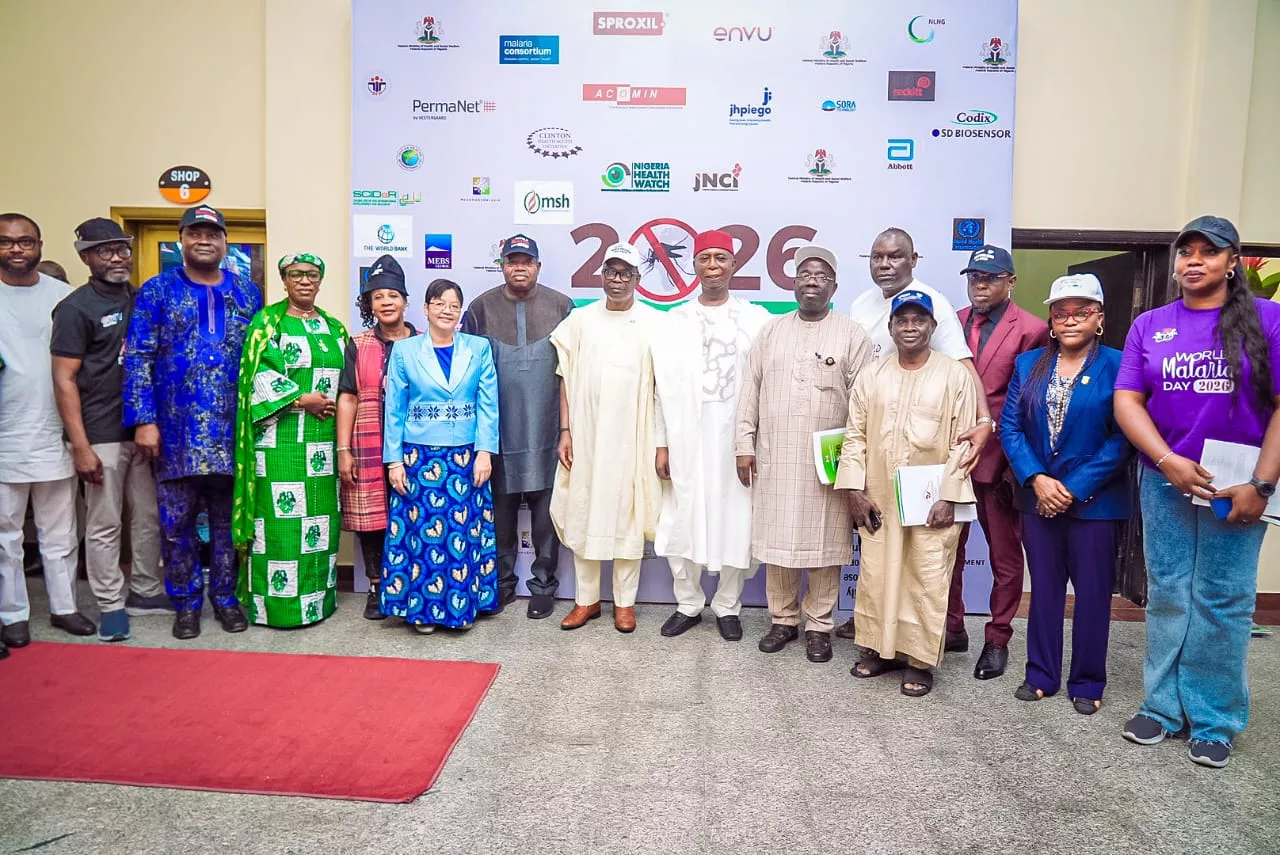
The Honourable Minister of State for Health and Social Welfare, Dr Iziaq Adekunle Salako, disclosed this development in his Keynote address as part of activities marking the commemoration of 2026 World Malaria Day, held in Abuja.
The Health Minister said this underscores, President Bola Ahmed Tinubu’s continued commitment to improving the health and well-being of Nigerians by strengthening national public health responses, stressing that eliminating Malaria and related diseases remains firmly in the centre of the Renewed Hope Agenda, noting that is not a slogan; it is a strategic priority.
He revealed that the National Malaria Strategic Plan 2026 to 2030, grounded in subnational tailoring so that interventions are designed to reflect the realities of different states and communities, saying that it aligned with the National Health Sector Strategic Blueprint (HSSB), the Sector-Wide Approach (SWAp), and the WHO Global Technical Strategy (GTS) and aims to reduce malaria parasite prevalence and mortality by 50% from 2025 levels by 2030.
Elaborating further on the giant strides, Dr. Salako explained that the Ministry has long established the Advisory on Malaria Elimination in Nigeria, AMEN, bringing together a distinguished council of global experts to provide technical support, evidence-based guidance, and strategic direction for a more effective path toward a malaria-free Nigeria.
He announced that over 500 million Insecticides Treated Nets, have been distributed from 2015 till date, revealing that this year, with the support of partners, access would be expanded to 11 states, namely: Akwa Ibom, Kebbi, Borno, Bauchi, Nasarawa, Abia, the Federal Capital Territory, Kogi, Osun, Kwara, and Adamawa. This intervention, he noted remains one of the most effective ways to protect families, especially children and pregnant women, from malaria infection.
According to the Minister, Seasonal Malaria Chemoprevention will be implemented across the 21 eligible states, comprising all 19 northern states, the Federal Capital Territory, and Oyo State, targeting at providing malaria preventive medicines to approximately 29 million children under the age of five, “thus delivering one of the largest child-focused malaria prevention efforts on the continent, and reflecting our resolve to protect those at greatest risk”. He reiterated
He said the process to pilot Larval Source Management (LSM) for the first time in six states, Abia, Borno, Ekiti, Lagos, Ondo, and Rivers, has advanced significantly, describing it as an important step in diversifying malaria control tools and addressing mosquito breeding sites at source through targeted, evidence-based environmental interventions.
In addition, he stated Nigeria has continued the phased rollout of the malaria vaccine, December 2024 in Kebbi and Bayelsa States has now been extended to Bauchi and Ondo States, reaching children aged 5 to 23 months with over 700,000 children benefitting from this preventive malaria intervention.
He acknowledged the support of partners and other stakeholders in the fight against malaria, reiterating it requires the active support of state governments, local government authorities, frontline health workers, civil society organisations, researchers, development partners, donors, community leaders, faith-based institutions, the private sector and the press, disclosing that government alone cannot achieved. “This is why we are adopting a whole of society approach and integrating non-state actors into our malaria elimination strategies” he said.
Presenting goodwill message during the event, Distinguished Senator Nnaji Nwokwo, representing Delta North Federal Constituency, commended stakeholders in the malaria elimination efforts, disclosing that soon an Agency that will focus on elimination of mosquitoes and malaria would be established as the bill has passed various stages, assuring frontline health workers not to panic as this would not affect their jobs.
Dr. Mayor of the World Health Organization, in her goodwill message on behalf of the Country Representative, Pavel Ursa emphasized on the theme” Driven to End Malaria: Now We Can, Now We Must” reaffirming that it reflects both hope and urgency, adding that by sustaining investment, innovation, and leadership, malaria elimination is achievable.
In her welcome address, the Permanent Secretary Federal Ministry of Health and Social Welfare, Daju Kachollom mni, represented by Dr. Kamil Shoretire, Permanent Secretary Designate and Director, Health Planning Research and Statistics said malaria, has a long shadow over our nation’s health and prosperity, describing it as a threat that continues to claim many lives, disproportionately affecting most vulnerable, “it is a burden that not only inflicts suffering but also stifles our economic engine, draining productivity and escalating healthcare costs” Daju reaffirmed.
She stated that this year’s event marked 26 years since the hostoric gathering of 44 African leaders on April 25th 2000, where they solemnly pledged to intensify malaria control efforts and mobilize the collective will of the continent and the global community, Nigeria stands resolute, she noted, in upholding that shared vision, committed to accelerating actions, galvanizing unwavering political will and mobilizing all necessary resources to finally end malaria as a public health threat.
Ado Bako
Assistant Director, Information and Public Relations.
