•Salako Inaugurates Blood Cancer Consortium, Highlights Expanded Prevention and Treatment Measures
Abuja, August 11, 2026 — The Federal Government has reaffirmed its commitment to strengthening partnerships and investments in cancer prevention, early detection and treatment as part of efforts to reduce the burden of cancer in Nigeria.
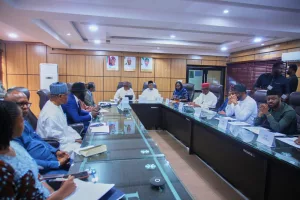
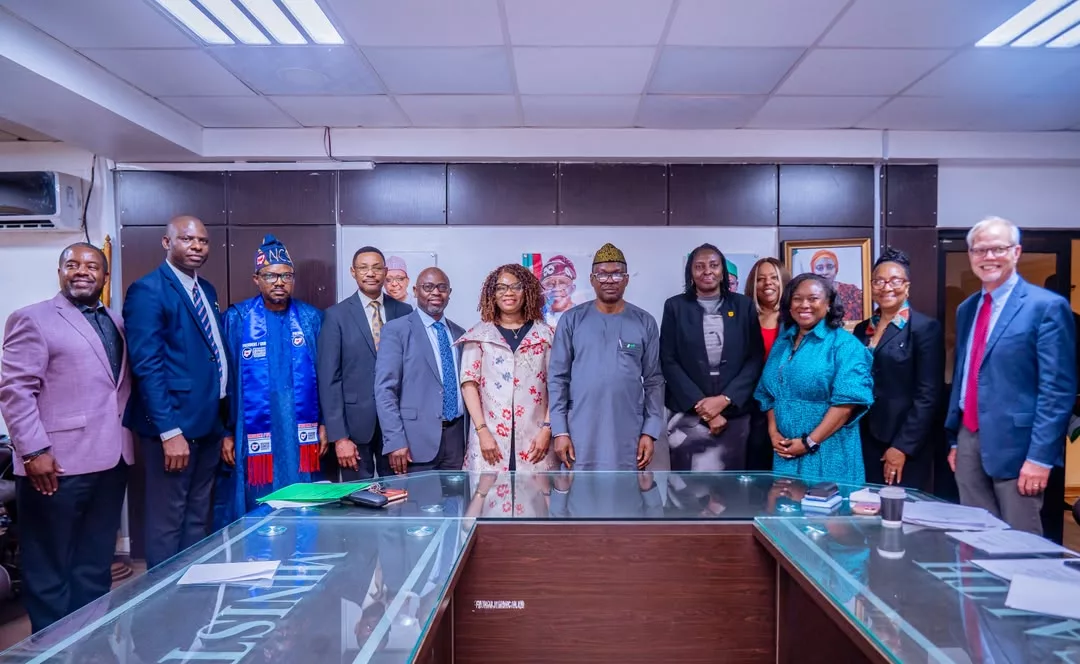
The Minister of State for Health and Social Welfare, Dr Iziaq Adekunle Salako, stated this when he received members of the Global Advisory Council of the National Cancer Control Plan Technical Working Group in Abuja.
He noted that cancer remains a major global health challenge, with the burden particularly severe in Africa due to late presentation, high mortality, limited infrastructure, inadequate manpower and constrained resources.
The Minister said the Federal Government had placed partnerships at the centre of the implementation of the National Cancer Control Plan 2026–2030, stressing that international expertise and collaboration would be critical to achieving sustainable progress.
He said the administration of President Bola Ahmed Tinubu has continued to prioritize cancer prevention, citing the inclusion of Human Papillomavirus (HPV) vaccination in the routine immunisation schedule as a major step towards preventing cervical cancer, in addition to expanding cervical cancer screening, improving public awareness and integrating screening services into primary healthcare to promote early detection.
“Prevention is better and cheaper than cure. We are doing everything we can to expand immunisation, improve screening and ensure that cancer is detected at a very early stage,” he said.
Salako disclosed that the Federal Government had commenced the construction of six cancer centres of excellence, with three already completed and the remaining three at various stages of development, adding that President Tinubu had also approved the procurement of 35 additional linear accelerators between 2027 and 2029, aimed at significantly expanding access to radiotherapy services and strengthening Nigeria’s cancer treatment capacity.
Salako commended members of the Global Advisory Council and the Technical Working Group for their commitment, expertise, networks and resources in supporting Nigeria’s goal of achieving improved cancer outcomes, and expressed appreciation to the Council for its support to Nigeria’s pathology laboratories, assuring the members that the donated equipment would be deployed effectively to improve diagnostic services.
Salako urged the Council and the Technical Working Group to continue building wider partnerships and mobilising expertise and resources from across the world to support Nigeria’s cancer control agenda.
The Minister expressed optimism that sustained collaboration among government, experts, development partners and other stakeholders would contribute significantly to the long-term goal of reducing and ultimately eliminating the burden of cancer.“On behalf of the Federal Government of Nigeria, I deeply appreciate what you are doing for us. Your commitment, sacrifice and dedication are highly valued,” Salako said.
While formally inaugurating the Blood Cancer Consortium, Salako described it as an important platform for advancing knowledge, collaboration and improved outcomes in the management of blood cancers, rearfirming that Nigeria remained committed to ensuring the partnerships established through the National Cancer Control Plan translate into tangible benefits for Nigerians and contribute to global efforts to combat cancer.
Earlier in her welcome remarks, the Permanent Secretary Federal Ministry of Health and Social Welfare, Daju Kachollom S. mni expressed delight for the visit and hope that it would be beneficial to Nigerians.
In her response, the Chairman, National Cancer Control Plan Technical Working Group,Professor Folakemi Odedina, who led the delegation,expressed appreciation to the Federal Ministry of Health and Social Welfare for the confidence and support given to the Technical Working Group, noting that the initiative had created an opportunity to bring together Nigerian experts at home and in the diaspora, government, academia, healthcare providers, patients, advocates, industry and international partners around a common national vision for cancer control.
While assuring that the Council would work with NCCP subcommittees, geopolitical zones, integration hubs and national institutions to accelerate measurable progress towards the 2030 cancer control targets, she further
disclosed that the NCCP Technical Working Group had become operational, with implementation of the structures established under a coordinated national framework.
Highlighting progress across key areas, Professor Odedina said on cancer research, NCCP was laying the foundation for a stronger national oncology clinical trials ecosystem that would develop Nigerian investigators, strengthen trial-ready institutions, expand patients’ access to clinical trials and position Nigeria as a major contributor to cancer research in Africa and globally.
She further announced the emergence of a new model of strategic institutional partnership between Nigeria and leading global cancer institutions, expected to involve institutions including the University of Maryland Comprehensive Cancer Center, Mayo Clinic Comprehensive Cancer Center, Fox Chase Cancer Center, Virginia Commonwealth University Massey Comprehensive Cancer Center, among others, working within a coordinated framework aligned with Nigeria’s national cancer control priorities.
“Together, we can change the trajectory of cancer in Nigeria,” she said.
The meeting was concluded with a ceremonial signing of strategic partnership between the Federal Ministry of Health and Social Welfare NCCPTWG and Global Advisory Council members.
Ado Bako
Assistant Director, Information and Public Relations