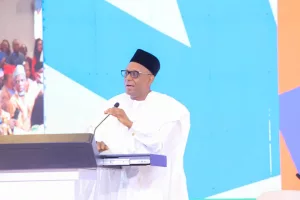
Professor Muhammad Ali Pate, CON
Coordinating Minister of Health and Social Welfare
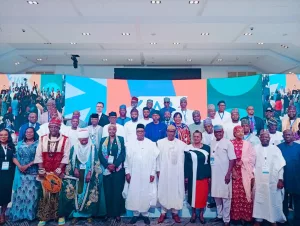
Transcorp Event Centre, Abuja
10 November 2026
1. Your Excellencies, the Chairman of the Nigeria Governors’ Forum, ably represented, and our state governors; my dear brother, the Honourable Minister of State for Health and Social Welfare, Dr Iziaq Adekunle Salako; distinguished Senator Dr Ipalibo Harry Banigo and members of the National Assembly; our Permanent Secretary, Daju Kachollom, mni; Honourable Commissioners for Health and heads of agencies; representatives of His Eminence the Sultan of Sokoto and the President of the Christian Association of Nigeria; our royal fathers and religious leaders; development partners; colleagues from the private sector, civil society and professional associations; members of the media; ladies and gentlemen.
2. Good morning. It is a privilege to welcome you to our third Nigeria Health Sector Joint Annual Review, under the theme “Together to Higher Grounds”. My colleague, the Minister of State, has already set the context. I thank him for his partnership as my co-pilot in leading the sector under His Excellency President Bola Ahmed Tinubu.
3. I also thank the SWAp Coordination Office, the Ministry’s staff and secretariat, and our colleagues in the states for bringing us together. I will focus on what we set out to do, how we approached it, what we have achieved and the work ahead.
The mandate and our approach
4. President Tinubu placed health among the principal priorities of his reform agenda. The wider macro-fiscal reforms are beginning to yield results, and health is one of the sectors through which those reforms are reaching Nigerians in their daily lives. Under the Renewed Hope Agenda, the Nigeria Health Sector Renewal Investment Initiative and our Health Sector Strategic Blueprint gave us a clear purpose: to save lives, reduce physical and financial pain, and produce health for all Nigerians.
5. When we began three years ago, we undertook a detailed review. Financing was inadequate, often poorly spent and unfairly distributed. Governance was fragmented across levels of government, regulatory responsibilities were insufficiently coordinated, and partner support was not fully aligned with national priorities. Essential commodities were unreliable, while health workers were too few in some communities and concentrated in others. Many frontline workers had gone for years without refresher training.
6. We organised our response around four pillars: improving governance, transparency and accountability; improving population health through an efficient and equitable health system; unlocking the healthcare value chain; and strengthening health security and resilience. Data and digitisation, health financing, and the talent and culture of our institutions support all four.
7. We adopted a national health systems approach. The Federal Government conceived and implemented these reforms with governors, commissioners, state agencies and local governments. Through the Sector-Wide Approach, we are aligning resources and responsibilities around One Plan, One Budget, One Report, One Conversation and One Voice. This is country-owned and government-led. We have taken responsibility for the health of our people.
8. The Health Sector Compact, signed in December 2023 by the Federal Government, states and development partners, and subsequently expanded to include local governments, civil society, traditional and religious institutions and the private sector, provides the platform. People’s voices, performance data and public scrutiny help us understand what is working and where we must improve.
Governance and financing
9. At the beginning of this administration, Mr President set performance commitments for the health sector. I am pleased to report that we have achieved all 41 commitments. These results reflect work across the federation and the institutions represented here today.
10. For the third successive year, all states and over 8,000 facilities supported by the Basic Health Care Provision Fund (BHCPF) have prepared plans ahead of the coming year, linked to budget priorities. We are strengthening the connection between planning, expenditure and the services people receive.
11. By October 2026, cumulative Basic Health Care Provision Fund releases since 2019 had reached approximately ₦422.3 billion. Of the ₦323.6 billion disbursed to the gateways, ₦249.5 billion was disbursed under this administration. We have signed a memorandum of understanding with the Independent Corrupt Practices and Other Related Offences Commission to support the tracking of these resources and strengthen accountability.
Primary healthcare and maternal and newborn survival
12. Working with states and partners, we have revitalised 3,526 primary healthcare centres, with work underway on a further 900 facilities. This is substantial progress, although it does not yet cover all the facilities that need attention. I thank the states for joining us in making these centres functional for our people.
13. We have recruited 19,758 skilled birth attendants across 22 states and 4,747 community health workers across 10 states. Training has reached 78,054 frontline health workers, and admission quotas in our pre-service training institutions have doubled. In local government areas covered by the Maternal and Newborn Mortality Reduction Innovation Initiative, MAMII, 91 per cent of BHCPF facilities now have at least two midwives or community health extension workers, up from 12 per cent at the outset. Within these areas, 99 per cent of BHCPF facilities are connected to the emergency referral system.
14. The use of services has increased. By the end of the second quarter of 2026, BHCPF facilities recorded 7.9 million skilled deliveries, compared with 4.8 million in 2023. Fourth antenatal care visits rose from 6 million to 8.7 million, and outpatient attendance increased from 32.4 million to 43 million.
15. Measles and rubella vaccination has reached 100 million children. We have also vaccinated over 17 million adolescent girls against human papillomavirus to help prevent cervical cancer. I thank Gavi, our immunisation partners and the health workers who have made this possible.
16. Through MAMII, we have mapped and linked 750,000 pregnant women to functional health facilities. Emergency transport now operates in 171 of the 172 MAMII local government areas and has transported 104,566 women and newborns. Across the wider referral network, 1,053 transport assets and 9,050 community drivers have carried 168,571 patients. These arrangements are connecting women and newborns to the care they need.
17. With our partners, we have re-equipped more than 300 secondary facilities for comprehensive emergency obstetric and newborn care, alongside over 500 primary healthcare facilities for basic emergency obstetric and newborn care. The facilities, staff and referral services must work together if we are to reduce preventable deaths.
18. Two years after we announced the free emergency obstetric care programme, almost 100,000 services have been delivered. They include 80,906 caesarean sections, approximately 9,100 newborn services and 6,059 vesicovaginal fistula repairs. Deaths from obstetric emergencies have fallen by 22 per cent in participating facilities. These are among the highest-risk maternal cases.
19. Within MAMII areas, BHCPF facilities have also recorded a reduction of approximately 60 per cent in maternal case fatality between 2024 and 2026. We must sustain the staffing, referral and financing arrangements that support these results.
Financial protection and specialist care
20. Health insurance coverage has risen from about 16 million to nearly 24 million Nigerians in three years. Expanding coverage is essential to reducing the financial burden of illness and helping families obtain care when they need it.
21. We have reduced dialysis costs by up to 80 per cent for 5,106 patients. Through the National Health Insurance Authority’s partnership with Roche, 710 patients have enrolled for an 80 per cent subsidy on selected cancer medicines. The Cancer Health Fund also supports indigent patients with breast, cervical and prostate cancers.
22. The free 48-hour emergency care programme covers 507 empanelled facilities and has benefited over 15,000 Nigerians. Hospitals have received ₦2.7 billion in reimbursements. Lifesaving treatment for emergency patients, including gunshot victims, must not be delayed for a police report.
23. We have commissioned three of six planned cancer treatment centres with NSIA MedServe, in Katsina, Benin and Enugu. The remaining centres are in development. Cancer centres in Abuja and Maiduguri have been refurbished, and ten MedServe diagnostic and specialist centres are operational. Across 60 federal tertiary hospitals, we have completed over 500 infrastructure and equipment projects in the past three years.
The healthcare value chain
24. Under the third pillar, ten factories or manufacturing lines have been commissioned, six of them in 2026. They cover pharmaceuticals, rapid diagnostic tests, long-lasting insecticidal nets and medical oxygen. I acknowledge Dr Abdu Mukhtar and the Presidential Initiative for Unlocking the Healthcare Value Chain for their contribution.
25. The Executive Order signed by Mr President in 2024 has supported ₦24 billion in tax waivers for pharmaceutical manufacturers in 2025–2026. We have 12 technology-transfer agreements and a prospective investment pipeline exceeding $5 billion. Our task is to help those prospective investments become operating businesses that supply safe, effective and affordable products and create opportunities for Nigerians.
26. NAFDAC’s work against falsified medicines is strengthening the regulatory conditions required for this industrial development. Medipool, our group purchasing organisation, will consolidate demand for medicines and health commodities. It will help organise government purchasing while other supply channels continue to operate. Reliable demand and effective regulation are important to the growth of local production.
Health security and resilience
27. Under the fourth pillar, much of the work is reflected in outbreaks that do not escalate. The imported Ebola case illustrates the importance of early detection, coordinated incident management and effective response. I thank the Nigeria Centre for Disease Control and Prevention, our port health teams and partners for coming together to contain that threat.
28. We must maintain this readiness. Lassa fever, cholera and meningitis continue to require daily attention. Strong surveillance, laboratory capacity and coordination across federal and state institutions are essential to protecting the public and maintaining confidence in our health system.
What the evidence tells us
29. The presentation earlier today showed improvement in 12 of the 13 indicators reviewed. Stunting, which takes longer to address, worsened slightly and remains a concern. The Nigeria Mini Demographic and Health Survey, covering 25,641 households, provides an independent assessment of progress. Compared with the 2024 baseline, the 2026 findings show that women receiving at least four antenatal care visits increased from 52 to 59 per cent, skilled birth attendance from 46 to 50 per cent, and the use of oral rehydration solution for childhood diarrhoea from 47 to 57 per cent. These findings help us assess changes in population health alongside the services recorded by our facilities.
30. Our People’s Voices Survey asks Nigerians directly about their experience of the health system. The proportion who believe the system is improving rose from 47 per cent in 2024 to 57 per cent in 2026. Patient satisfaction stood at 71 per cent, compared with 76 per cent in 2024. We must respond to the concerns behind those findings, particularly affordability and the quality of patients’ experience.
31. The Clinical Governance and Patient Safety Task Force has completed its work, and guidelines are in place. We must now strengthen implementation, professional standards and accountability in our facilities so that improvements in access are accompanied by dependable care.
32. Community participation also matters. Through the National Health Fellowship Programme, we have selected 774 Fellows in each of two cohorts, one for every local government area, making 1,548 in all. I encourage states, local governments and partners to involve them in planning and review. They can help connect community concerns with the institutions responsible for delivering services.
The next phase
33. Financing remains a major task. We have seen increases in federal and state allocations, and we are working to improve the release and execution of those funds. Legislative efforts to raise the BHCPF allocation to 2 per cent of the Consolidated Revenue Fund, together with proposed reforms of excise duties on sugar-sweetened beverages and the earmarking of revenue for health, could substantially increase resources available to the sector.
34. The health memorandum of understanding with the United States also commits us to increasing domestic financing, with the aim of ending dependence on external assistance by 2030. For the period from April 2026 to December 2030, the United States is expected to provide nearly US$2 billion in grant funding, while Nigeria plans nearly US$3 billion in additional domestic health financing. External support will decline as we increase our own contribution. This responsibility belongs to federal and state governments alike. We cannot sustain ownership of our priorities without financing them. We must mobilise domestic resources, release them on time and use them effectively.
35. The health workforce remains another priority. Some frontline facilities still have too few workers, while professionals are concentrated in Abuja, Lagos and other urban centres. States have an important role in providing incentives for service in rural and underserved communities. We must value the professionals who work there and provide conditions that make it possible for them to stay.
36. Migration continues, but we are also seeing Nigerian professionals explore opportunities to return and serve at home. We are working with professional associations on remuneration and other incentives. The collective bargaining process has advanced to the Presidential Salaries Committee, where further improvements in compensation are under consideration. Better infrastructure, equipment and working conditions must accompany that effort.
37. Modernising federal tertiary and specialist hospitals will receive greater attention. These institutions must provide high-quality clinical services while fulfilling their responsibilities for research and training. We have begun to improve their infrastructure; the next phase must strengthen the services they deliver.
38. Further expansion of insurance is equally important. The NHIA must become a stronger strategic purchaser of services from both public and private providers. The private sector delivers a substantial share of healthcare in Nigeria and is an essential partner in reducing out-of-pocket spending and improving access.
39. We will also deepen medical industrialisation, operationalise Medipool and support an industrial base that can supply pharmaceuticals, diagnostic tests and, over time, vaccines. Digital transformation, including the responsible use of data and artificial intelligence, offers opportunities to improve planning and service delivery. We must build on the foundations already laid.
The federation and our partners
40. I ask the Director-General of the Nigeria Governors’ Forum to convey our appreciation to all 36 governors. These results have been achieved together. Federal action depends on the commitment and execution of states and local governments.
41. I particularly acknowledge Jigawa’s regular health-sector performance meetings. I have seen the Governor reviewing performance late into the night. Abia and Nasarawa have completed and reviewed their annual plans on time. Kaduna has accelerated primary healthcare revitalisation beyond the initial plans. Kano and Katsina have invested in rural emergency transport, while Adamawa has demonstrated the value of aligning partner support at state level.
42. Akwa Ibom’s investment in specialist care and its efforts to reduce medical tourism also deserve recognition. During my visit to Katsina, I saw the Governor’s strong commitment to financing health. These are examples; nearly every state is contributing in an area from which others can learn.
43. I thank the World Bank for its support through HOPE and IMPACT; WHO, UNICEF, Gavi and the Global Fund; the United Kingdom and United States governments; the members of the multi-donor trust fund; development finance institutions; the Gates Foundation and other philanthropic partners. You have supported these reforms through a demanding period. National ownership and international cooperation work together when roles are clear and results speak to our people. We need that cooperation as governments increase their own commitments.
44. I also thank the Healthcare Federation of Nigeria, other private-sector partners and civil society organisations. Your resources, expertise and scrutiny have contributed to this work. The Nigerian Medical Association, the Joint Health Sector Unions, the Pharmaceutical Society of Nigeria, nurses, midwives and other professional groups have engaged with us patiently through difficult conditions. We do not take that understanding for granted.
45. Our traditional and religious leaders have stood with us. When the Ebola case occurred, I spoke with His Eminence the Sultan of Sokoto and the President of the Christian Association of Nigeria. They offered their platforms to support the response. Their leadership and the trust they hold in communities are important to public health.
46. To the media, thank you for reporting progress, educating Nigerians and questioning our claims. That scrutiny is necessary. I also thank the citizens who continue to demand better services and hold us to our responsibilities.
Closing
47. Above all, I thank the hundreds of thousands of Nigerian health workers: the nurse on the night shift, the midwife managing a difficult delivery, the laboratory scientist identifying an infection, the community health worker following up a pregnant woman, the ambulance driver answering a call, and the specialists and consultants caring for patients and training their colleagues. We owe you more than thanks. We owe you better working conditions and the tools to do your work well.
48. Let me also acknowledge our Permanent Secretary and the directors and staff of the Ministry for their diligence. I thank Dr Muntaqa Umar-Sadiq and the SWAp Coordination Office, together with the state teams working alongside commissioners, and the heads and staff of our agencies. The National Primary Health Care Development Agency, the NHIA, NCDC, NAFDAC, the National Agency for the Control of AIDS and our other institutions have each carried important responsibilities.
49. Mr President provided the mandate for this renewal. Our responsibility is to deepen implementation and strengthen the institutions and financing arrangements that will sustain it. As we undertake this third Joint Annual Review, let us use the evidence before us to agree the work ahead and follow through on our responsibilities.
50. Thank you, and may God bless the Federal Republic of Nigeria.