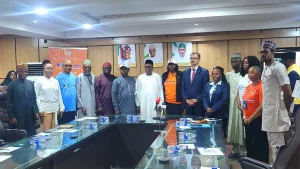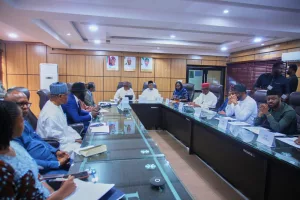
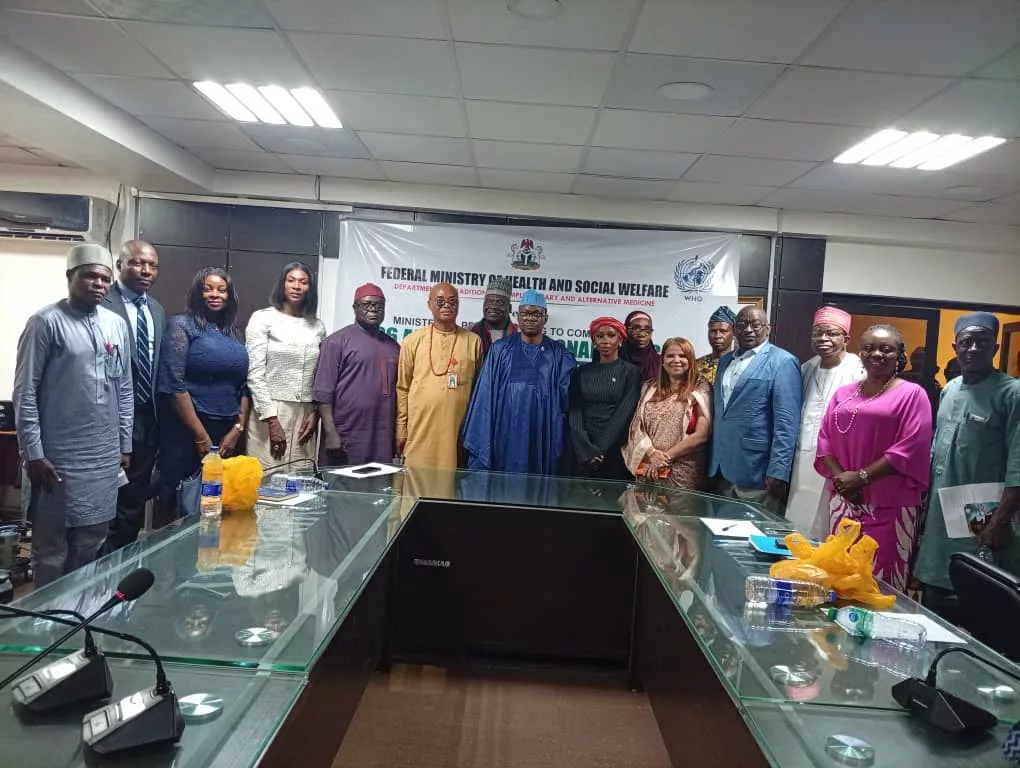
Abuja, August 31, 2026 — The Federal Government has reaffirmed its commitment to repositioning traditional medicine as an important component of Nigeria’s health and economic development agenda, with emphasis on scientific research, regulation, quality assurance and safety.
The Minister of State for Health and Social Welfare, Dr. Iziaq Adekunle Salako, stated this in Abuja at the commemoration of the 2026 African Traditional Medicine Day, themed “Around Research and Development in Traditional Medicine towards Achieving Universal Health Coverage in the African Region.
Dr. Salako said the commemoration provided an opportunity to reflect on measures required to strengthen research, generate evidence, improve quality assurance and ensure the safety of traditional medicine products and practices, while harnessing their potential contribution to Universal Health Coverage.
“The future of traditional medicine must be built on rigorous research, effective regulation, quality assurance, ethical practice, documentation and continuous evaluation,” the Minister said.
According to him, the Nigerian Traditional Medicine Policy recognises the importance of the sector and provides a framework for its appropriate development and integration into the national healthcare system.
The Minister, however, stressed that cultural acceptance alone could not constitute scientific evidence, noting that traditional medicine products and practices must be subjected to rigorous scientific evaluation to establish their safety, efficacy and quality.
“The government is clear that cultural acceptance alone cannot constitute scientific evidence,” he stated.
Dr. Salako explained that the Department of Traditional, Complementary and Alternative Medicine in the Federal Ministry of Health and Social Welfare was established to develop and implement policies, promote the development and commercialisation of Nigerian traditional medicine, and facilitate its integration into the national health system.
The Minister further disclosed that the Federal Government had taken several steps to strengthen the sector, including the unveiling in 2025 of the Strategic Plan of Action for the Implementation of the Traditional Medicine Policy, as well as the Code of Ethics and Practice for Traditional Medicine Practitioners.
He said the initiatives were designed to improve standardisation, professional conduct, safety, quality assurance and evidence-based practice.
Dr. Salako also highlighted continued collaboration with national and international partners in research, capacity building and knowledge exchange, stressing that Nigeria must move beyond acknowledging the importance of traditional medicine to establishing systems capable of validating, regulating, developing and appropriately integrating proven traditional medicine interventions into the healthcare system.
He said the country’s approach must be deliberate and balanced, preserving indigenous knowledge while applying modern scientific standards, protecting community intellectual property, promoting innovation and expanding access without compromising safety.
The Minister outlined government priorities to include strengthening research and evidence generation; regulation and quality assurance; documentation and preservation of indigenous knowledge; local production and innovation; and deeper integration of safe and effective traditional medicine into conventional healthcare.
He therefore called on traditional medicine practitioners to embrace research, documentation, ethical practice and collaboration, while urging researchers and academics to intensify scientific investigations and translate findings into practical health solutions.
Dr. Salako also tasked regulatory agencies with developing and enforcing frameworks that guarantee safety, quality and efficacy, while encouraging the private sector and investors to explore opportunities in research, development, manufacturing and commercialisation of scientifically validated traditional medicine products.
The Minister urged development partners and international organisations to support African-led research, strengthen capacity building and promote equitable partnerships, emphasising that the interests of patients and the public must remain central to the development of traditional medicine.
“Traditional medicine and modern medicine should not be viewed simply as competing systems. Evidence demonstrates that they can work together safely and effectively,” Dr. Salako said.
He stressed that the two systems should become complementary components of a stronger, more responsive and people-centred healthcare system.
The Minister reaffirmed the Federal Government’s commitment to harnessing Nigeria’s rich traditional medicine heritage while ensuring that medicines promoted to the public meet appropriate standards of safety, quality and effectiveness.
He called on stakeholders to use the 2026 African Traditional Medicine Day to move beyond reflection to action by investing in research, strengthening institutions, protecting indigenous knowledge, supporting innovation and local production, and ensuring responsible regulation.
In her goodwill message, the Senior Special Assistant to the President on Women’s Health, Dr. Adanna Steinacker, called for the preservation and promotion of Nigeria’s indigenous medical knowledge through research, regulation and quality assurance.
According to her, credible indigenous knowledge must be properly documented, protected and responsibly transmitted to future generations, stressing that preservation must go hand in hand with scientific research and development to establish safety, efficacy, appropriate dosage and possible interactions with conventional medicines.
Dr. Steinacker said research would not diminish traditional medicine but would help identify practices that work and translate beneficial knowledge into solutions capable of contributing to Universal Health Coverage.
On women’s health, Dr. Steinacker stressed the importance of ensuring that women have access to safe, respectful and evidence-based care throughout adolescence, the reproductive years, pregnancy, postpartum and menopause.
She cautioned that while traditional medicine could complement modern healthcare, it must not delay antenatal care, skilled delivery, emergency treatment or timely referral when required.
Dr. Steinacker said the Renewed Hope Agenda of President Bola Ahmed Tinubu was committed to achieving Universal Health Coverage that is inclusive, culturally responsive and centred on the wellbeing of Nigerians.
The World Health Organisation (WHO) Representative at the event, Dr. Hamza Omotayo, also called on Nigeria to deepen research, regulation and quality assurance in traditional medicine to ensure its safe and effective integration into the national healthcare system.
He noted that traditional medicine remained a vital source of healthcare for millions of people, particularly in communities where it is accessible, affordable, culturally accepted and trusted.
The WHO Representative commended Nigeria for the progress made in developing structures and policies to strengthen the sector, particularly the establishment of the Department of Traditional, Complementary and Alternative Medicine in the Federal Ministry of Health and Social Welfare.
He also acknowledged the development of key instruments, including the National Traditional Medicine Policy and the Nigerian Pharmacopoeia, which support the standardisation of traditional medicines and practices.
He further urged stakeholders to accelerate the documentation and preservation of indigenous knowledge, promote local production and commercialisation of validated traditional medicine products, protect intellectual property rights and ensure equitable benefit-sharing with indigenous communities.
The WHO Representative disclosed that the organisation had previously collaborated with relevant Nigerian institutions to conduct capacity-building workshops, during which 40 traditional medicine practitioners were trained on the harvesting and preparation of standardised medicines.
While congratulating the Federal Ministry of Health and Social Welfare, traditional medicine practitioners, development partners and other stakeholders, he expressed optimism that greater collaboration would enable traditional medicine to contribute meaningfully to family healthcare, health security and the achievement of Universal Health Coverage in Nigeria.
Ado Bako
Assistant Director, Information and Public Relations.