27 June, 2026-The Federal Government has recorded significant milestones in the implementation of the Nigeria Health Sector Renewal Investment Initiative (NHSRII), with notable improvements in primary healthcare delivery, health insurance coverage, maternal and child health, emergency medical services, and disease preparedness nationwide.
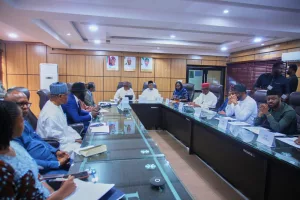
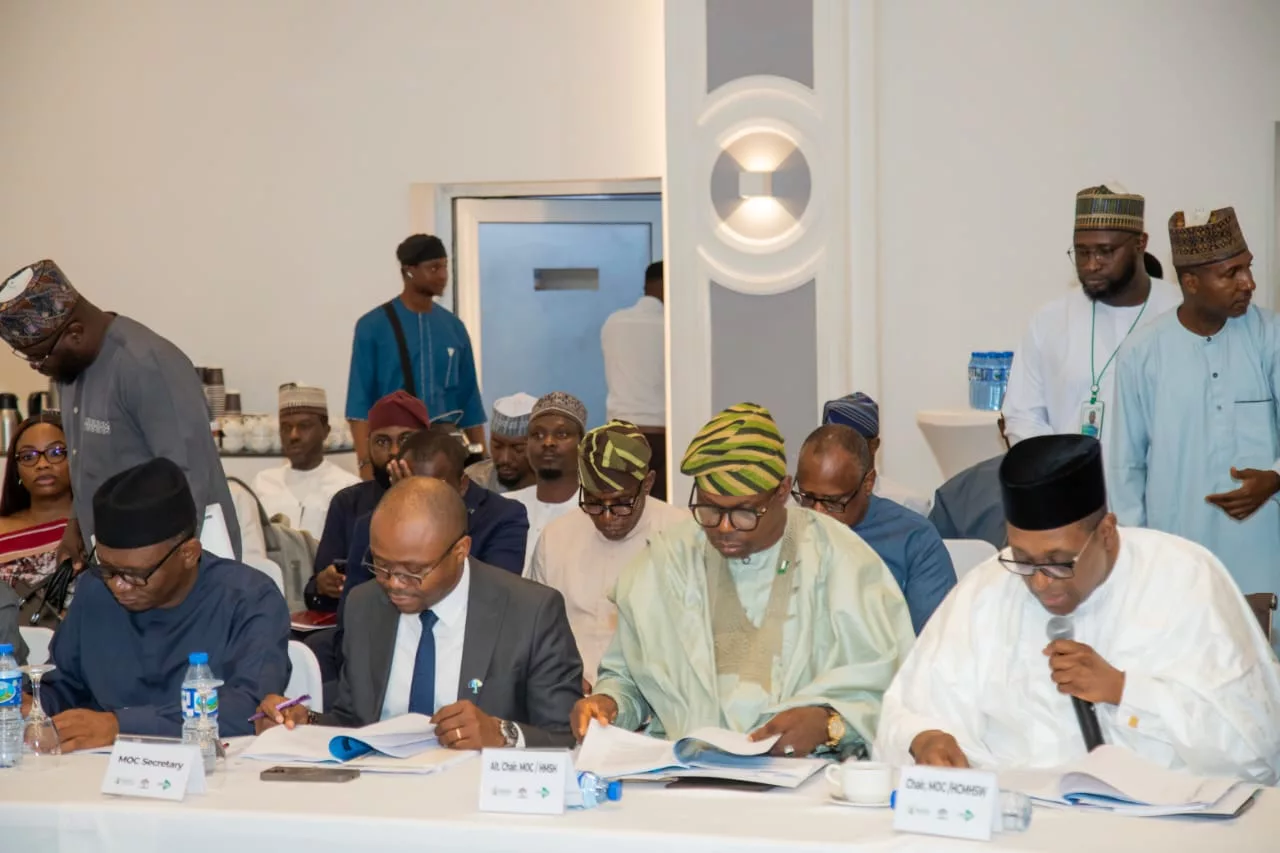
The Coordinating Minister of Health and Social Welfare disclosed this while briefing journalists after the quarterly meeting of the Expanded Ministerial Oversight Committee (MOC), convened to review progress, address implementation challenges, and chart the next phase of the country’s health sector reforms.
The Expanded Ministerial Oversight Committee comprises Federal Government health agencies, State Commissioners for Health, State Primary Health Care Development Agencies, development partners, civil society organisations, and other relevant ministries and stakeholders.
Pate, stated that since the launch of the Nigeria Health Sector Renewal Investment Initiative by President Bola Ahmed Tinubu, GCFR, in December 2023, remarkable progress has been achieved through increased investment in the Basic Healthcare Provision Fund (BHCPF).
He revealed that although a total of ₦339 billion had been disbursed through the BHCPF over the last twelve years, ₦235 billion of that amount was released during the last three years under the Tinubu administration, demonstrating its commitment to strengthening primary healthcare across Nigeria.
According to the Minister, more than 8,000 Primary Healthcare Centres (PHCs) across the 36 states and the Federal Capital Territory now receive quarterly direct facility financing to support essential healthcare services, medicines and commodities, health insurance for vulnerable groups, emergency medical services, and disease outbreak preparedness.
He noted that over 130,000 Nigerians have benefited from emergency medical services financed through the BHCPF. While 35 states have established emergency medical service structures, Benue and Imo States currently depend on Federal Government health institutions for service delivery.
The Minister further disclosed that the Nigeria Centre for Disease Control and Prevention (NCDC) has continued to support states in strengthening disease surveillance, laboratory capacity, outbreak detection, and emergency preparedness for cholera, Lassa fever, viral meningitis, and other infectious diseases.
He added that the Federal Government recently approved additional BHCPF resources for all states to strengthen preparedness against Ebola Virus Disease following outbreaks within the African region, complementing the Presidential multi-sectoral Ebola Preparedness Task Force.
On primary healthcare revitalisation, he announced that over 3,000 Primary Healthcare Centres have been upgraded to Level Two status, while nearly 1,000 additional facilities are currently undergoing revitalisation. “Assessment is also underway to expand the Direct Facility Financing programme from over 8,000 facilities to 17,600 PHCs, with an equity-based funding formula that considers population size and disease burden”.
The Minister noted that approximately 40 per cent of Federal Government funding under the BHCPF is being utilised for essential medicines and health commodities. He commended states that have begun providing counterpart funding and called on all state and local governments to fulfil their statutory contributions of 25 per cent and 15 per cent, respectively, to further strengthen primary healthcare financing nationwide.
The Committee also reviewed preliminary findings from the 2026 Mini Demographic and Health Survey (Mini-DHS), which indicate encouraging improvements in antenatal care attendance, skilled birth attendance, contraceptive prevalence, childhood immunisation, child healthcare services, and HIV interventions.
The Minister described the findings as evidence that the ongoing reforms are beginning to translate into measurable improvements in population health outcomes and reaffirmed the government’s commitment to sustaining the momentum.
He further announced that health insurance coverage has expanded significantly, with over six million Nigerians enrolled within the last three years, increasing total enrolment from about 16 million to over 22 million beneficiaries.
In maternal and child health, the Minister disclosed that more than 48,000 women have received free comprehensive emergency obstetric care, including life-saving Caesarean sections, under the Federal Government’s maternal health intervention programme. He added that over 4,700 women have successfully undergone free Vesico Vaginal Fistula (VVF) repair surgeries across 207 healthcare facilities, while more than 2,900 newborns have benefited from neonatal healthcare interventions.
He also announced that over 40,000 Nigerians have been enrolled in health insurance through a pilot programme jointly implemented by the National Health Insurance Authority (NHIA) and the Global Fund to expand financial protection for vulnerable populations.
Despite the impressive achievements, the Minister acknowledged that challenges remain, particularly the migration of healthcare workers from primary healthcare facilities to higher-level hospitals, especially in the South-East, South-South and South-West regions.
He therefore urged state governments to prioritise adequate staffing of Primary Healthcare Centres, stressing that primary healthcare remains the bedrock of Nigeria’s health system and is primarily the responsibility of state and local governments, emphasizing that the Committee approved the disbursement of ₦32.8 billion to states under the Basic Healthcare Provision Fund to sustain ongoing interventions in primary healthcare, emergency medical services, health insurance, disease preparedness, and other health sector reforms under the Sector-Wide Approach.
He reaffirmed the Federal Government’s commitment to working closely with state governments, development partners, civil society organisations, and other stakeholders to consolidate the gains already recorded and accelerate progress toward achieving universal health coverage and improved health outcomes for all Nigerians.
Ado Bako
Assistant Director, Information and Public Relations.