•Daju Says Breastfeeding is Effective Intervention, life-saving, Cost Effective
The Federal Government has reaffirmed its commitment to protecting, promoting and supporting breastfeeding as a critical strategy for improving maternal and child health outcomes, while officially launching the 1,000 Days of Life Social and Behaviour Change (SBC) Campaign to strengthen nutrition practices across Nigeria.
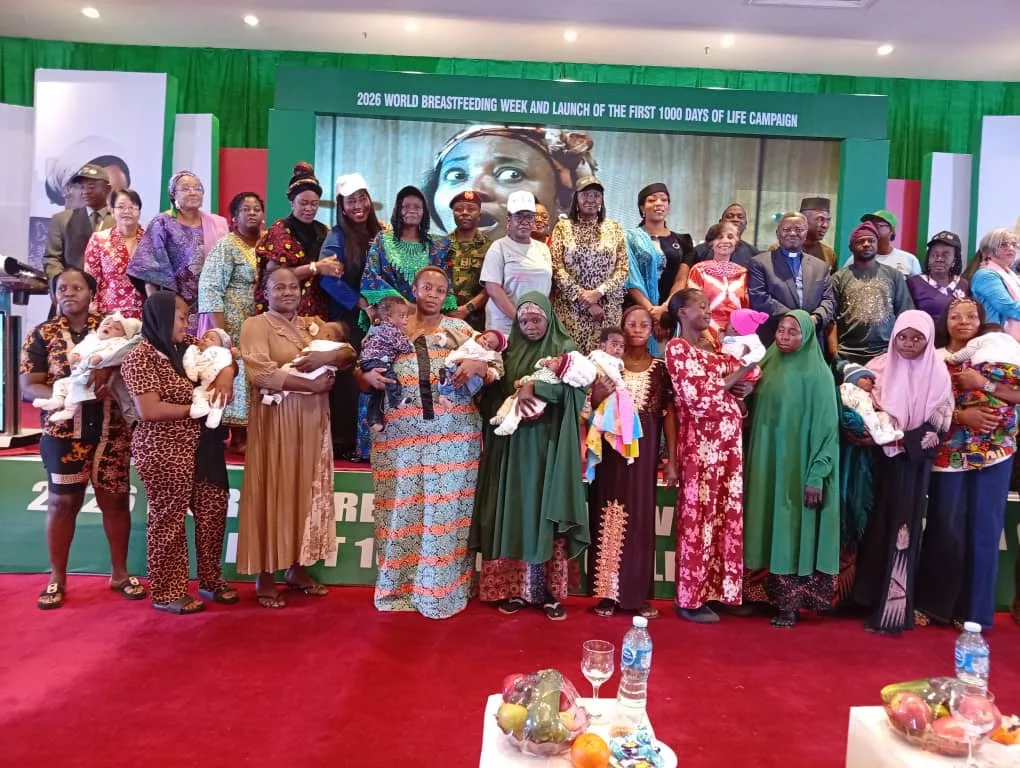
Speaking at the 2026 World Breastfeeding Week commemoration and the launch of the campaign held on Monday, 3 August 2026, in Abuja, the Permanent Secretary of the Federal Ministry of Health and Social Welfare, Ms. Daju Kachollom S mni, described breastfeeding as one of the most effective, life-saving and cost-effective interventions for ensuring healthy child survival and development.
Addressing participants on the global theme,”Breastfeeding for Sustainable Start in Life: Strengthen What Works”, the Permanent Secretary noted that the theme underscores the need to reinforce proven interventions through stronger policies, quality health services, baby-friendly workplaces and empowered communities.
She reaffirmed the Ministry’s commitment to safeguarding the first 1,000 days of life—from conception to a child’s second birthday—which she described as the most critical period for physical growth, brain development and lifelong health.
According to her, poor nutrition during this period results in irreversible consequences, including stunting, impaired cognitive development, weakened immunity and reduced productivity later in life.
The Permanent Secretary observed that although about 95 per cent of Nigerian mothers breastfeed, optimal breastfeeding practices remain below national and global recommendations. She cited findings from the 2023/2024 Nigeria Demographic and Health Survey (NDHS), that show only 36 per cent of newborns are breastfed within the first hour of birth, while just 29 per cent of infants are exclusively breastfed for the first six months of life, noting that only 23 per cent of children continue breastfeeding up to 24 months.
Highlighting the need for renewed commitment and accelerated action, Daju, reiterated for supporting the recommendations of the World Health Organization (WHO) and UNICEF, calling for early initiation of breastfeeding within one hour of birth, exclusive breastfeeding for the first six months, and continued breastfeeding alongside appropriate complementary feeding up to two years and beyond.
Ms. Kachollom acknowledged that several barriers continue to hinder optimal breastfeeding practices, including delayed initiation of breastfeeding, harmful cultural beliefs, inadequate counselling, limited workplace support, aggressive marketing of breastmilk substitutes and insufficient community participation, emphasizing that overcoming these challenges requires collective action by governments, healthcare workers, employers, development partners, communities and families.
The Permanent Secretary outlined key government interventions aimed at improving breastfeeding practices nationwide. These include strengthening the National Maternal, Infant and Young Child Nutrition Strategy, expanding Baby-Friendly Hospital and Community Initiatives, building the capacity of health workers, enforcing the International Code of Marketing of Breastmilk Substitutes, promoting breastfeeding-friendly workplaces, supporting community breastfeeding groups and increasing public awareness through sustained advocacy.
Launching the 1,000 Days of Life Social and Behaviour Change Campaign, the Permanent Secretary explained that the initiative is designed to improve knowledge, promote positive nutrition behaviours and mobilise families and communities to adopt evidence-based nutrition practices throughout pregnancy, infancy and early childhood, expressing confidence that the initiative would strengthen national efforts to improve maternal,infant and young child nutrition and contribute significantly to better health outcomes for all Nigerians.
The campaign, she said, promotes improved maternal nutrition, early initiation of breastfeeding, exclusive breastfeeding, timely complementary feeding, continued breastfeeding and stronger community ownership of optimal nutrition practices.
She also urged pregnant women and nursing mothers to utilise Primary Health Care Centres for antenatal care, safe delivery, postnatal care, child immunisation and nutrition services, emphasising that these facilities remain the foundation of accessible and quality healthcare in Nigeria.
Earlier in her welcome address, the Director, Nutrition Department, Federal Ministry of Health and Social Welfare, Mrs. Olufunmilola Adegbite called for the protection of mothers from barriers to breastfeeding and promotion of supportive workplace policy.
The Director, described breastfeeding as not only health intervention but as an investment in education, economic productivity, environmental sustainability and national development, arguing that a child who is not malnourished from first 1,000 days is more likely to grow healthy, educated, productive and Resilient adult who continues to the prosperity of his foundation.
Presenting a goodwill message, the Senior Special Assistant to the President on Public Health, Mrs. Uju Rochas-Anwukah, announced the soliderity of His Excellency, the Vice President of the Federal Republic of Nigeria, Senator Khashim Shetima who joins Nigeria and the world in commemorating this year’s World Breastfeeding Week, describing breastfeeding as the single most powerful public health intervention available to any nation on earth.
Considering the gaps as records indicate that only 29% of Nigerian infants are exclusively breastfed for their first six months,43% receive breast milk and water together, the Vice president has directed that breastfeeding should be treated as a national investment, not as a maternal choice only.
“This is why the Vice President has directed that breastfeeding be treated, not only as a maternal choice, but as a national investment. A breastfed child is a healthier child. A breastfed child is a smarter child. A breastfed child is a more productive citizen in waiting.” She stated.
She said under the leadership of His Excellency President Bola Ametubu GCFR, human capital has been made centerpiece of governance, identifying the the first 1,000 days of a Nigerian’s child as the most foundational human capital investment.
“The Office of the Vice President welcomes today’s launch of the first 1,000 Days of Life Nutrition, Social and Behavioral Change Campaign. This campaign must not end in Abuja. It must travel through the 774 local government areas, leveraging the Nutrition 774 framework, into every ward, every primary health care center, every household” Mrs. Uju Rochas-Anwukah charges.
Signed
Ado Bako
Assistant Director, Information & Public Relations
3 August, 2026.