— Salako Says Reform Will Replace Punishment with Care, Support and Timely Intervention
ABUJA, 10 SEPTEMBER 2026: The Federal Government has taken a major step towards the decriminalisation of attempted suicide in Nigeria, following the approval by the Federal Executive Council (FEC) of the position of the Federal Ministry of Health and Social Welfare on the matter.
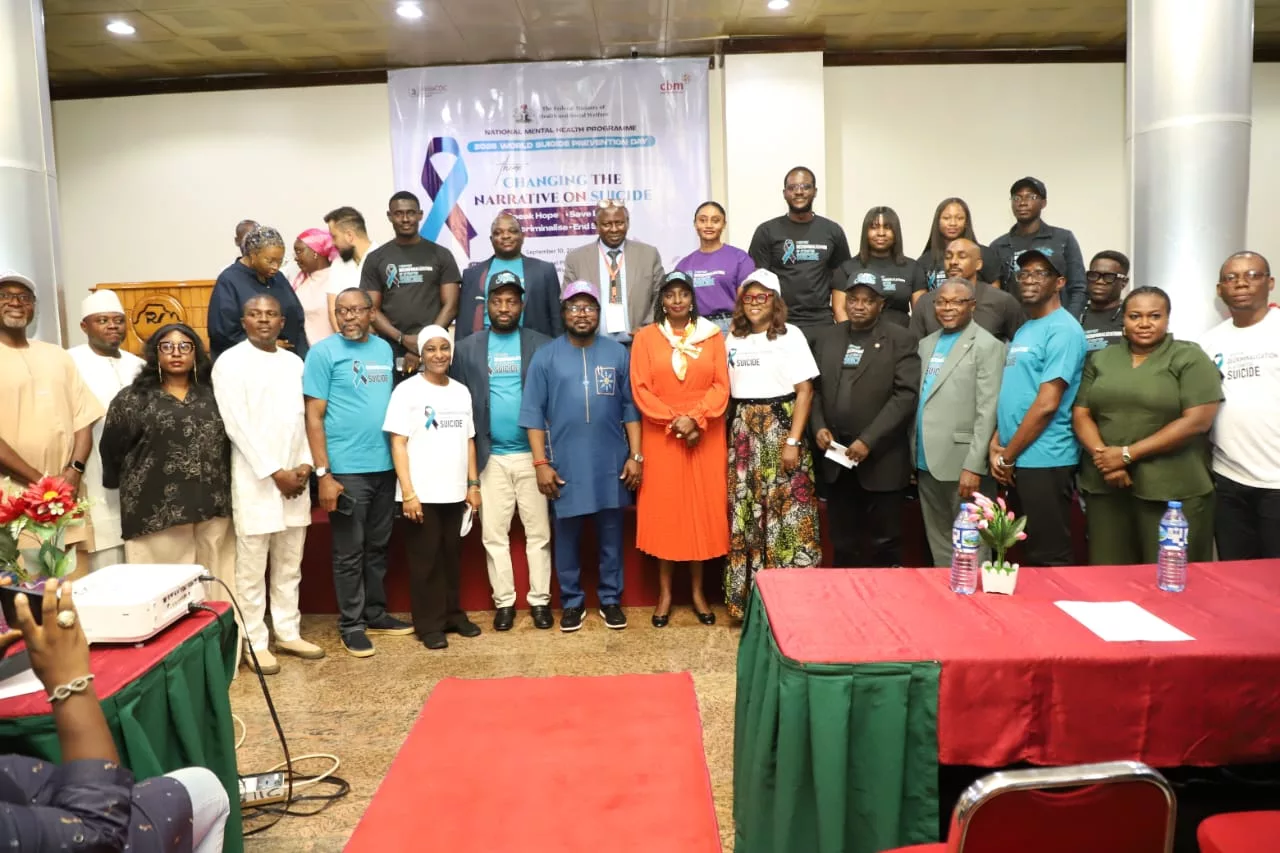
The Honourable Minister of State for Health and Social Welfare, Dr. Iziaq Adekunle Salako, disclosed this in Abuja on Thursday at the commemoration of the 2026 World Suicide Prevention Day, held under the theme, “Changing the Narrative on Suicide.”
Represented by the Permanent Secretary of the Ministry, Daju Kachollom S. mni, the Minister, said following the FEC approval, the matter will proceed to the National Assembly for the necessary legislative process, expressing optimism that the process would be concluded without delay.
Dr. Salako described the decriminalisation of attempted suicide as not only a legal reform but also a public health and human rights imperative, stressing that a person experiencing a mental health crisis should receive care, support and appropriate intervention rather than punishment.
“A person experiencing a mental health crisis should be met with care, support and appropriate intervention, rather than punishment. Removing the fear of criminal sanctions can help reduce stigma, encourage help-seeking and create greater opportunities for timely intervention,” the Minister said.
While describing the FEC approval as a major milestone, Dr. Salako emphasised that legislation alone would not prevent suicide, stressing the need for sustained investment in mental health services, early identification and intervention, community support and public awareness.
“We must continue to strengthen mental health services, expand access to quality care, promote early identification and intervention, support persons with lived experience, empower communities and foster open conversations that replace fear and discrimination with empathy and hope,” he said.
Dr. Salako stated that the Federal Government’s action was consistent with the Renewed Hope Agenda of President Bola Ahmed Tinubu, GCFR, and the administration’s commitment to strengthening Nigeria’s health system, saving lives, reducing suffering and improving access to quality healthcare.
He said the Federal Ministry of Health and Social Welfare had continued to strengthen the national response to mental health and suicide prevention through key policy and legal instruments, including the National Mental Health Act, 2021; National Mental Health Policy, 2023; and National Suicide Prevention Strategic Framework 2023–2030.
The Minister further disclosed that the Ministry had established the National Task Force on the Decriminalisation of Attempted Suicide, comprising stakeholders from government, academia, professional associations, civil society organisations, development partners and persons with lived experience.
He explained that the Task Force had conducted extensive stakeholder consultations, engaged policymakers across the three arms of government, developed a Government White Paper to inform decision-making, and undertaken advocacy, sensitisation and public awareness activities on suicide prevention and decriminalisation.
The Minister called on government institutions, development partners, civil society organisations, faith-based and traditional leaders, the media, academia, healthcare professionals, youth organisations and Nigerians across the country to join the Federal Government in changing the narrative on suicide, reiterating that suicide prevention is a shared responsibility.
Earlier in his welcome remarks, the Director, Public Health, Dr. Charles Nzelu, represented by Dr. Adebobola Bashorun, National Coordinator, NASCP, said the Ministry remains committed to providing strategic leadership and coordination for mental health promotion and suicide prevention through the implementation of national policies and strategies.
Other commitments Nzelu said are: strengthening of mental health services, integration of mental health into primary healthcare, capacity building for health workers, expansion of community-based interventions and strengthening of partnerships.
The Director, highlighted the ongoing national efforts towards the decriminalisation of attempted suicide, noting that the Ministry, through the National Task Force on Decriminalisation of Attempted Suicide, has facilitated extensive stakeholder engagement, evidence generation, policy dialogue, advocacy, sensitisation and public awareness.
He explained that the inclusive process has brought together government institutions, legal experts, mental health professionals, civil society organisations, development partners, youth representatives and persons with lived experience, noting that their contributions were essential to developing a response that reflects the realities and needs of Nigerians.
The Director, urged Nigerians to create an environment where people can speak openly about their mental health, express their emotions and seek help early without fear of stigma or discrimination.
He noted that the commemoration was not merely an annual observance, but an opportunity to strengthen partnerships, exchange knowledge, raise public awareness and mobilise concrete actions towards preventing suicide in Nigeria.
He therefore called on all stakeholders to remain committed to changing the narrative on suicide and building a society where people experiencing mental health challenges can access timely care, support and hope.
Dr. Akanmu Mujtaba, Mental Health Programme Manager, Clinton Health Access Initiative, Nigeria,in his goodwill message stated that suicide remains a significant public health concern, disclosing that globally, over 700,000 lives are lost to suicide each year, with more than 70% of these deaths occurring in low- and middle-income countries.
In Nigeria, he said, the World Health Organisation estimates over 7,000 suicide deaths and roughly 300,000 suicide attempts annually, noting that behind each figure are families and communities changed by loss, and a clear reminder that suicide is preventable when systems, policy, and compassion act together.
While rearfirming CHAI’s continued support, he commended the Federal Ministry of Health and Social Welfare and the National Mental Health Programme for driving this milestone, describing the Council’s approval, as a beginning, therefore, encouraged the Ministry to carry this achievement through to full legislative passage soon.
World Suicide Prevention Day is observed annually on 10 September to raise awareness about suicide prevention and promote collective action to reduce suicide and suicidal behaviour globally.
Ado Bako
Assistant Director, Information and Public Relations.