ABUJA, 7 October 2026: The Federal Government has reaffirmed its commitment to strengthening cancer prevention, early detection, diagnosis, treatment and survivorship through resilient, innovative and equitable health systems.
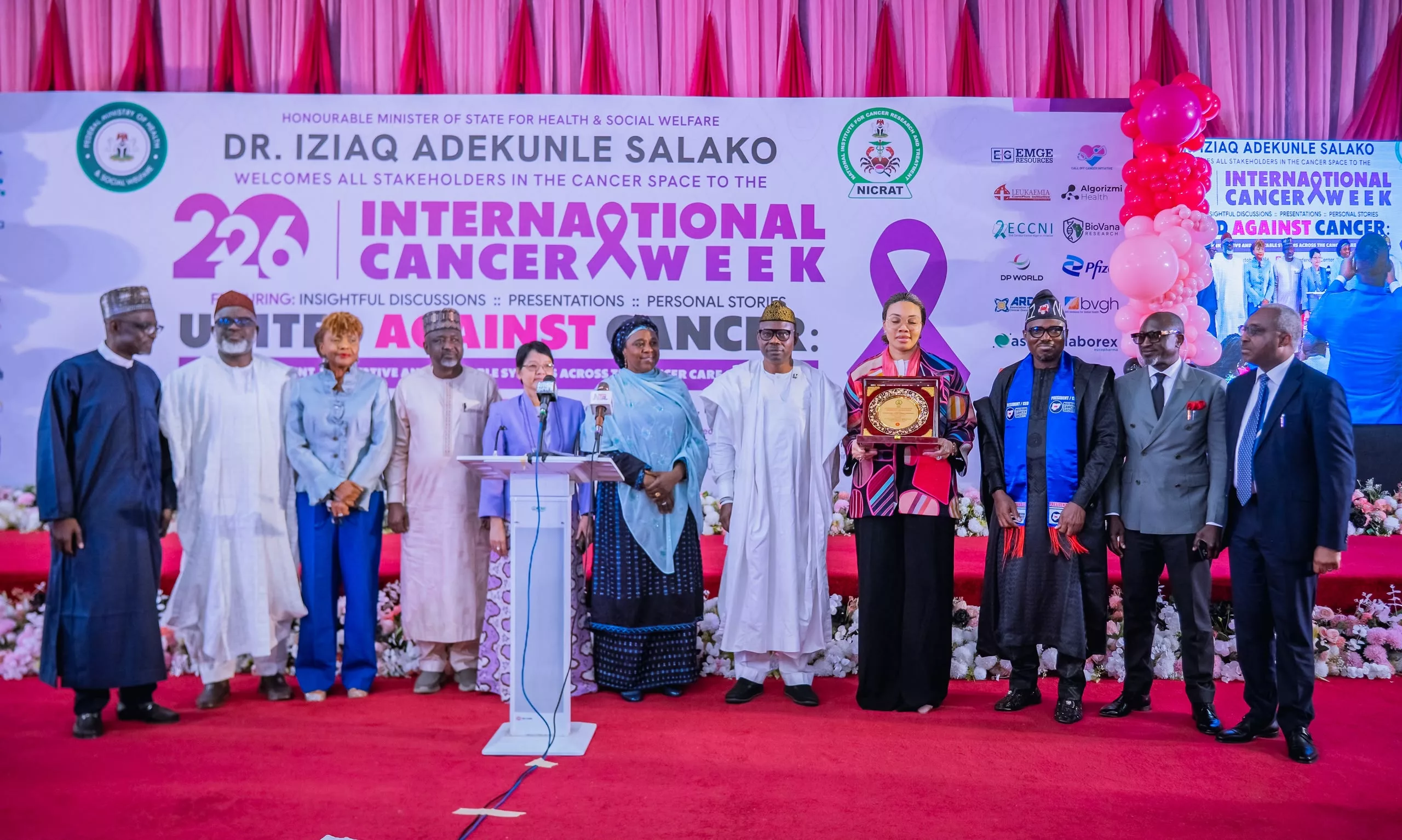
The Minister of State for Health and Social Welfare, Dr. Iziaq Adekunle Salako, stated this while declaring open the 2026 International Cancer Week in Abuja, organised by the National Institute for Cancer Research and Treatment (NICRAT), with the theme: “United Against Cancer: Building Resilient, Innovative and Equitable Systems Across the Cancer Care Continuum.”
Salako said the Federal Government, through the Federal Ministry of Health and Social Welfare and NICRAT, was implementing strategic interventions to reduce the cancer burden, including the development and commissioning of cancer centres of excellence, the approved procurement of 35 Linear Accelerators over the next three years, expansion of diagnostic services, and the introduction of Immunohistochemistry services under the Nigeria Cancer Access Partnership Programme.
According to him, Nigeria was also strengthening prevention and early detection through eight NICRAT Preventive Oncology Clinics across the six geopolitical zones, nationwide cancer awareness initiatives and HPV vaccination, which has reached more than 18 million girls aged 9–14 years.
He added that the National Taskforce on Cervical Cancer Elimination was coordinating national efforts towards the WHO 2030 cervical cancer elimination target.
The Minister said innovation, research and data would remain central to Nigeria’s cancer-control strategy, noting that government would continue to harness digitalisation, artificial intelligence, telemedicine, molecular diagnostics, precision medicine, cancer registries and data analytics to improve access, clinical decision-making and patient outcomes.
He further highlighted the costed National Cancer Control Plan 2026–2030 and the Nigeria Nuclear Medicine Strategic Plan as key frameworks guiding national action, with a target of achieving a 30 per cent reduction in the national cancer burden by 2030 through improved prevention, early diagnosis, data management and standardised treatment.
Salako stressed that financial protection was critical to equitable cancer care, noting ongoing efforts through the National Cancer Health Fund and catastrophic health expenditure financing mechanisms to reduce the financial burden of cancer treatment on individuals and families.
He called for stronger collaboration among government institutions, development partners, international organisations, academia, professional associations, the private sector, civil society and patient groups, stressing that no single institution could address the cancer burden alone.
“Cancer control is a shared responsibility. Our goal is clear: no Nigerian should be denied lifesaving cancer care because of poverty, geography or social circumstance. Prevention must remain at the centre of our national response because prevention is not only better; it is cheaper and it is everything,” Salako said.
He commended President Bola Ahmed Tinubu, GCFR, for his leadership and commitment to transforming Nigeria’s health sector, particularly the increased investment and attention being given to cancer prevention and control.
The Minister urged Nigerians to take advantage of available cancer prevention, screening and early-detection services, while calling on stakeholders to translate the outcomes of International Cancer Week into measurable actions that would improve cancer outcomes across the country.
Ado Bako
Assistant Director, Information and Public Relations.